Dreamy or Steamy: Ariele's Reading Expedition into the Romance Genre

For the past year, I’ve been reading romance novels. Not exclusively, of course, but I’d say about 80% of the books I’ve read have been romance.

I always used to be the type of person who said, “Oh, I don’t mind romance, but I’m not a romance reader.” I still kind of feel that way, however, my overall perspective has greatly changed.

I should probably start from the beginning, though.

As you know, I have a series of fairy tale retellings set in space (Rove City). Most fairytales, especially modern retellings, are typically considered romances. The majority of the Disney princesses, for example, are main characters in romance stories, though they have been branching out somewhat in recent years.

After writing the fifth and sixth stories in my series, I started to feel a bit like I had no idea what I was doing. Writing romance that is believable, balances the right amount of tension with the right amount of steam, and progresses at the right pace while blending in a separate storyline at the same time is no joke. And I felt like I wanted to learn to do it better. I also wanted to figure out how to string romantic tension through a whole series, and while there were lots of books on writing romance specifically, I couldn’t find anything focused on a series-level.

So, I decided that I should learn from the best: romance writers.

And now, one year and roughly 150 romance novels later, I suddenly find I have a lot of opinions lol.

I had two types of questions I was asking as I went into this project:

  1. What are these writers actually doing with language, structure, characterization, etc. that makes their work different from non-writers? How do they do it?

  2. Am I really “not a romance reader” or have I just not found the right sub-genre of romance that fits my taste?

I have answers to both of those questions now and a lot more, and I’m going to detail them at length here, simply because I can. I also want to qualify here that I am not coming at this “from the perspective of a writer” or “from the perspective of a reader” but as both. I’m both of those things, and I’m beyond the point of being able to separate those two parts of my self.

Without further ado, my opinions.

1. Romance the genre is huge.

So like, I knew this. It’s a billion dollar industry, right? Lots of people write in it, lots of people read in it. But it’s not just huge, it’s gargantuan, both from a money perspective and a breadth perspective. Literally every possible other genre exists in romance, and as far as I can tell, romance is in every other genre.

I made somewhat of a mistake when I first started this project. I didn’t know where the best place to dip in my toe was, so because I like scifi and fantasy, I decided “paranormal” sounded like a good place. [Cue laugh.] Yeah. I definitely managed to jump into the steamy end of the pool right out of the gate.

Which, of course, then made Amazon recommendations full of steam. It took me a while to get out of, to be honest, but I figured out pretty quickly that rather than starting with paranormal, I should start with other fairy tale retellings, since that’s what I was writing. So I pivoted, and things got a little better for me.

That’s one of the first things you should know about me personally: I definitely prefer the less steamy end of things.

But as I was browsing, I made it my goal to try a little of everything. I read paranormal and fairytale, as I said, but I also read contemporary, billionaire, sci-fi romance, romantic fantasy, LGBTQ+, rom com, historical from various periods including regency, romantic suspense, YA, even one erotica and a secret baby (who knew such a thing existed!).

It was an education. Mostly I learned that I will never ever fully understand the breadth and depth of the romance genre because it is already enormous and growing every day.

2. Language matters.

One of the first things that jumped out at me was language. The ratio of suggestiveness to steam is really important, because it keys the reader into exactly how much steam is (should) be in the book (or series) right from the get-go.

The more suggestive the language, the longer and more detailed the sex scenes were likely to be. The less suggestive the language, the shorter they were, or more likely to be fade to black.

I’m now at the point where I can usually tell from the meet-cute how steamy the book will be, without having read the blurb or the reviews. And the thing is, if the suggestive language and the scenes themselves don’t align, it feels off. It’s either empty feeling or a shock to the system.

As a writer, I think this is really important. It means I now have a specific set of guidelines for exactly what type of language I should be using based on what types of scenes I might include. As a reader, it means I can tell pretty early on whether or not I should put a book down.

So for example, in a sweeter romance where there’s only a single kissing scene, the main character will notice things like the love interest’s eyes, their hands, their hair, their smile. The steamier it gets, the lower their attention falls—chest, stomach, butt, etc. In sweet books, the character never imagines anything beyond a kiss; in steamy books, the character imagines exactly what they they get later in the scenes, minus about ten percent. But the key is: they never visualize more than what they get.

3. The way authors describe their books is a mess.

To be fair here, I don’t think this is any different than any other genre, and I do think romance is better at this than other genres. I’ve also seen some authors have started listing tropes, providing content warnings, etc. to try to help clear things up. But the word “steamy” doesn’t really mean anything anymore. I picked up so many books labeled as “steamy” that were sweet or X, that it got to the point where I had to look at tropes and be like “is that a steamy trope or a sweet trope?”, and honestly, it was a lot of work.

I think the problem is that everyone thinks about romance novels on sort of a linear spectrum. Like, how “steamy” it is depends on how much sex is in it. But steam isn’t only about sex. It’s also about emotional tension. It’s about how much work the characters have to do to be together. I think it’s more of a 2-dimensional problem, and as such I think we need more words to describe it.

I know this has been a discussion in the romance community, but I came up with my own system. This is how I would do it if I were the boss of everybody, which I’m not lol. And also, my labeling could probably use some work. But here’s a rough draft of my suggestion:

For those of you who can’t read my handwriting, here’s what you’re looking at: it’s basically a graph or a chart. The x-axis is the steam axis, or the sexual tension in the novel. I posited that on the far left, you have nothing… it’s just not romance. But as you move to the right, you start on the sweeter end with kissing scenes or fade-to-black sex scenes at most; then you slowly increase in number of sex scenes or related scenes (hand jobs, BJs, etc.). As I said before, the type of language used to describe stuff would also heat up, using more and more suggestiveness.

On the y-axis, I have relationship tension. Again, it starts at 0 with no relationship, but as you move up, my thought is that the barriers to the couple getting together increase. On the sweeter end, both characters want to be together, but it’s the self that stands in the way (of one or both characters); then as you move up, there are external barriers that might be “we live on different continents” or “we’re different species” or “we’re assassins who have been hired to kill each other”; and then at the top, you have ideological barriers which are deeply held beliefs reinforced by the external world, such as “I love you but you’re evil” or “we are from different religions” or “we’re fighting on opposite sides of this war.” At the top I thought would be the darkest stuff, like “we don’t consent to being together” but I’m entirely not sure about that.

Then I broke it out, with the idea that most romance novels could be plotted on the chart, and gave the different sections categories. Some you will recognize, like sweet and erotica (though, I might actually put erotica in place of hot tamale, but I dunno because I’ve only read one lol). But with a new set of labels, writers could say “high tension and low sex, means my book is roasting” or whatever.

Anyway, the way we label and talk about books is really confusing in general, and I’d love to see some more complex approaches to it developed, and I think the romance genre has a lot of potential for much cleaner categorization.

4. There’s a clear difference between a romantic subplot and a romantic main plot, but also sometimes not.

As part of my journey, I read a book called Romancing the Beat by Gwen Hayes. In this book, Hayes outlines the high-level beats of a typical romance novel. It goes roughly something like:

  • Attraction

  • Something keeps them apart

  • First yes moment

  • Conflict worsens

  • Getting to know each other

  • They decide it can’t work and leave each other (dark night of the soul)

  • They solve problem and get back together

  • Resolution/Denouement

The way I understood it from Romancing the Beat, is that there are basically two requirements for it to be a romance: there has to be a happy ending, and the characters both have to choose to end their relationship during the dark night of the soul moment before they get back together for good.

I’ve read plenty of scifi and fantasy novels where the characters don’t choose to be separated. They might be ripped away from each other unwillingly, and they might not break up at all! I think in these cases, the romance would be considered a subplot, and the reason is because the climactic moment of the narrative is not about the relationship. It’s about something else entirely.

To me, this is the key between a book that is a romance, and a book with a romantic subplot. What is the point of the climactic moment? Is it the characters overcoming whatever it is that keeps them apart? If so, it’s the main plot. Or is it saving the world or defeating the big bad or whatever? If so, it’s a subplot.

Now, I say this, because I think in most cases this is a clear differentiator. And let me be the first to say, obviously controversially, that in the Court of Thorns and Roses series, the romance is a subplot. The books aren’t about the main character’s relationship, they’re about defeating that evil lady and fighting the war (sorry it’s been a while so I don’t remember all the details lol). The subplot is definitely steamy, though.

But there are some books where the romance and the other plot are inextricable from each other. I think a common example of this are fantasy arranged marriage tropes, where the two characters have to create some sort of emotional bond that enables them to trust each other, and the whole fate of the world (external plot) depends on their trust. So it’s not always clear cut.

I thought the Bridge Kingdom by Danielle Jenson or the Loom Trilogy by Elise Kova were examples of the less clear-cut option, if you’re trying to figure out what I’m talking about.

It might be worth it to have a third differentiator, in cases like these. Romantic main plot, romantic subplot, and romantic braid plot? I dunno, I’m just making things up here haha.

5. I want more Relator romances. And older characters.

Those of you who know me, know I’ve been interested in the Clifton Strengths personality system as of late (#1 Achiever, #2 Intellection, #3 Strategic, #4 Ideation, #5 Learner, #6 Input, #7 Relator). My only relationship strength is Relator, which basically means I’m good at getting to know someone one-on-one.

Here is what my Clifton Strengths report says about me: “You naturally form genuine and mutually rewarding one-on-one relationships. Your authenticity allows you to build close, long-lasting connections that foster trust and confidence.”

For me, this is particularly true of romances. Fun fact about me, my shortest dating relationship was one month, and I was friends with the guy in question for over a year before we started dating (dating was a bad idea lol, we should’ve stayed friends). I would rather not be in a relationship at all than be in a short lived, emotionally fraught one, and I spent years of my single life unattached and happy about it.

But many romance novels focus on people falling in love in excruciatingly short time periods. Three days. A week. Three weeks. And I totally get that this is something readers enjoy. I’m not suggesting anyone stop writing these books. I just would like to see more of the books where the relationship is long. Where they get to know each other over a period of time, do stuff together, work together, before they profess love or, you know, do all the other stuff.

I also have begun to get frustrated with main characters who are 18 years old. I obviously am a big scifi and fantasy fan, so I like scifi and fantasy plots, but it’s 2022! Most people aren’t getting married until their late 20s anymore, but many books are full of 18 - 20 year olds who get thrown into a relationship with a 200 year old fae or who suddenly discover they have magical powers or who get dragged into a world of magic because of their identity.

I recently read one about a 20-year-old who get dragged into competing in this magical competition. But later into the story, we learned that the competition only happens every few generations. She easily could have been 25 or 30 or 50 or whatever—but she was 20. The story was entertaining though (I just upped her age in my head, which is what I usually do), but like, this is just a plea for fantasy & fairytale writers to consider the age of your character. We get to make whatever rules we want in our stories, so let’s make some older characters.

And I do really prefer romantic subplots to main plots. I don’t like the moment when the two characters walk away from each other in the Romancing the Beat plot structure, at least not the way a lot of books handle it. It stresses me out. As a Relator, if I’ve invested enough time and energy into someone to develop the kind of relationship most characters have in the novels, and I decide that it won’t work and am willing to walk away, I don’t come back. There were a few books I read where it was done smoothly and logically enough that it didn’t stress me out, but most of the time, particularly in contemporary novels, I didn’t enjoy it.

So there you have it: my personal preferences lol. I want older characters in slow, extended relationships as subplots in a sci-fi or fantasy world.

And before anyone patronizingly says, “Why don’t you write them, Ariele?” you should know I’m already working on it. But I also want to read some. And it’s very different reading your own work than reading someone else’s.

List of Books I Enjoyed

In conclusion, I have to say that I was pretty impressed by the books I read. Most of them were high quality, well edited, engaging stories with interesting characters and intriguing plots. And in fact, since I’m in a generous mood, I’ll list out a few that I enjoyed. It’ll only be a fraction of the books I read, and I’m not going to claim these were the best, because ranking them is too hard. But maybe you’ll find something you’ll like.

Typically, I leaned toward fantasy and fairytale retelling, on the sweet end with up to one sex milder scene. I enjoyed slower burn (those are the closest to Relators I can find) subplots with smart main characters. I also enjoyed the sweeter end of regency books more than I anticipated, and a couple rom coms. (Caveat: these are my own personal preferences! I am under no illusions that my preferences are “correct” or even that my preferences reflect those of other romance readers! They are mine and mine alone.)

Here are a few titles in no particular order, if you’re inclined to check them out (also, I refrained from adding titles from any of my friends, so no favoritism):

  • The Elf Tangent by Lindsey Buroker

  • The Bridge Kingdom by Danielle Jenson

  • Theodora by Christina McKnight

  • Love Handles by Gretchen Galway

  • Falling for a Rake by Eve Pendle

  • The Loom Trilogy by Elise Kova

  • The Daragh Deception by Kenley Davidson

  • Spellbound After Midnight by Jenna Collett

  • The Scarlett Princess by Robin D Mahle and Elle Madison

  • Fair Isle by Tessonja Odette

  • Beneath the Citadel by Destiny Soria

  • Prince of the Doomed City by Sylvia Mercedes

  • The Strange Case of the Alchemist’s Daughter by Theodora Goss

  • Ash by Melinda Lo

There you have it! If you have any thoughts on my observations, feel free to comment below. And if you’re interested in my work, feel free to sign up for my newsletter for regular updates!

I Accidentally Released A Book and Other Tales

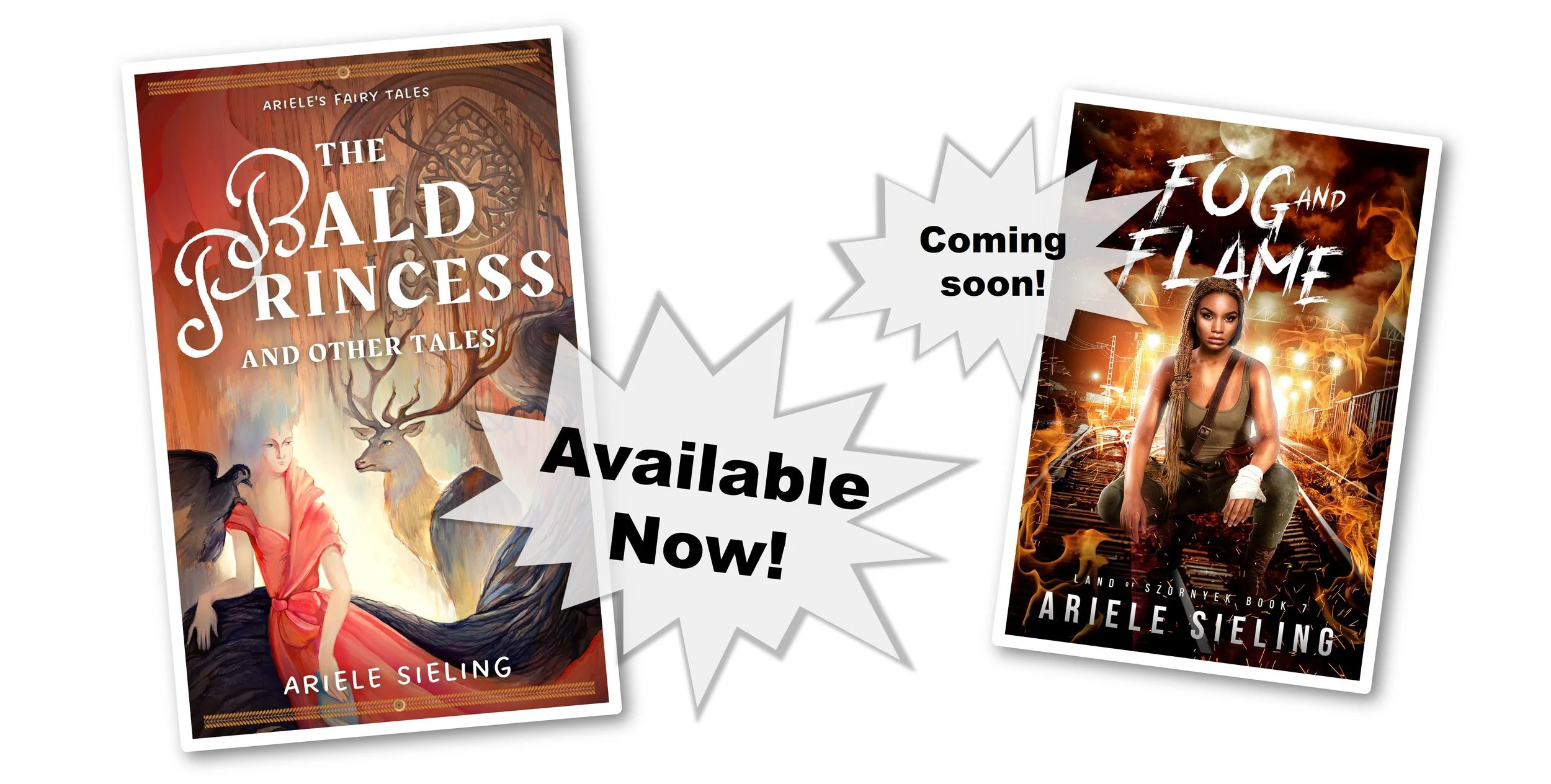
I accidentally released a book! It’s titled The Bald Princess and Other Tales.

Click to grab your copy!

Enjoy five original fairy tales in this collection by Ariele Sieling. Written in the same style as Grimm's fairy tales, each story seeks to explore modern values in the context of an eccentric, omniscient world filled with wild animals, kings and queens, magic, and more.

In The Bald Princess, meet Elspeth, who is in search of a hair piece that will do justice to her eventual role as queen.

In The Twilight Wood, meet Eloita, a young guard tasked with protecting a prince who is determined to understand a powerful forest that kills all who enter it.

In The Guilt of the Enchantress, meet Liaandra, a powerful battle mage who makes a terrible mistake that changes the course of her life forever.

In The Wolf Princess, meet Sable, cursed as a child to run with the wolves, but who has embraced her new identity with gusto—until her parents start searching for her in earnest.

In The Milkmaid and the Death Weed, meet Fiora, a young milkmaid who sets out to seek her fortune, only to discover that everything she touches dies.

This book is the first in a series of anthologies filled with brand-new engaging and heart-warming fairy tales.

One of the things you should know about me is that I do not operate well on a fixed schedule. I keep a running list of things I need to get done, and I choose my daily activities based on my mood. This has taken some training, as I'm sure you can guess, given that sometimes I feel like playing video games or watching TV rather than working, but these days I'm excited about my work most of the time, so it's not a problem. 

What is a problem, is when I try to force myself to hit deadlines. As soon as there's a due date in my brain, it's like I freeze up, and every moment I spend working toward the deadline is painful, slow, and inefficient. Of course, I can't be entirely free of deadlines—I do have to work with other people sometimes, and I have editing clients and whatnot.

I've figured out a few strategies for this. For example, I tend to give myself a lot more time to do the work than I technically need. I also try to schedule things monthly whenever I can, rather than trying to hit a specific day. Mainly, though, I just don't set deadlines on anything I don't have to.

This means that sometimes I publish books later than I planned. It also means that sometimes I publish books earlier than planned. 

So here we are. 

If you will remember, during Camp National Novel Writing Month last April, I focused on writing anything I wanted to, to practice and lean into my intuitive writing. It was wildly successful (you can read about it here), and one of the things I produced was a series of original fairy tales. 

My new book, The Bald Princess and Other Tales, is a compilation of the first batch of fairy tales. It also includes a foreword, in which I talk about the project, and an author's note in the end which, to be honest, is basically just an essay on why I think fairy tales have such staying power in our culture. I anticipated releasing this in July, but it's ready to go, so I figured: why wait? Volume II will likely be out later this summer (though, no deadlines, and no promises!); not to mention, I have quite a few other things in the works. 

I hope you enjoy the original tales in The Bald Princess and Other Tales, and stay tuned for more updates!

Click to sign up for my newsletter!

Monster Compendium: Tentacles and Teeth

Recently, a reader suggested to me that I put together a compendium of monsters, so readers could see all the monsters from the Land of Szornyek world. As you may know, I have already done illustrations for my patrons (click here to become a patron!), but I decided that it’s time to start sharing the drawings more widely.

I’ve put quite a few on Instagram in various stages of conception, but now I will be sharing each of them in blog posts. I have considered doing a book as well, but that would be a future project. For now, enjoy the monsters from Tentacles and Teeth!

Nagy

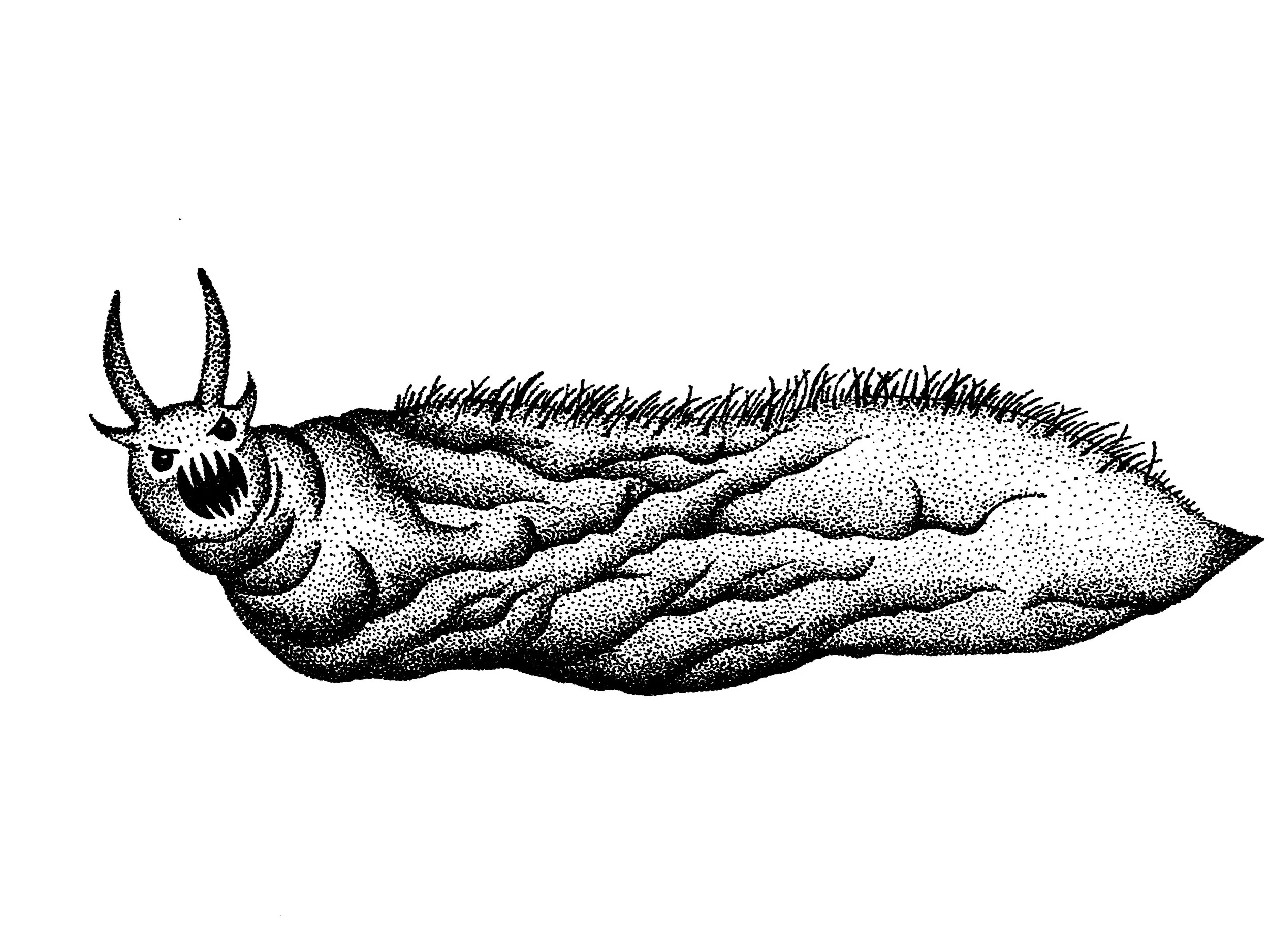
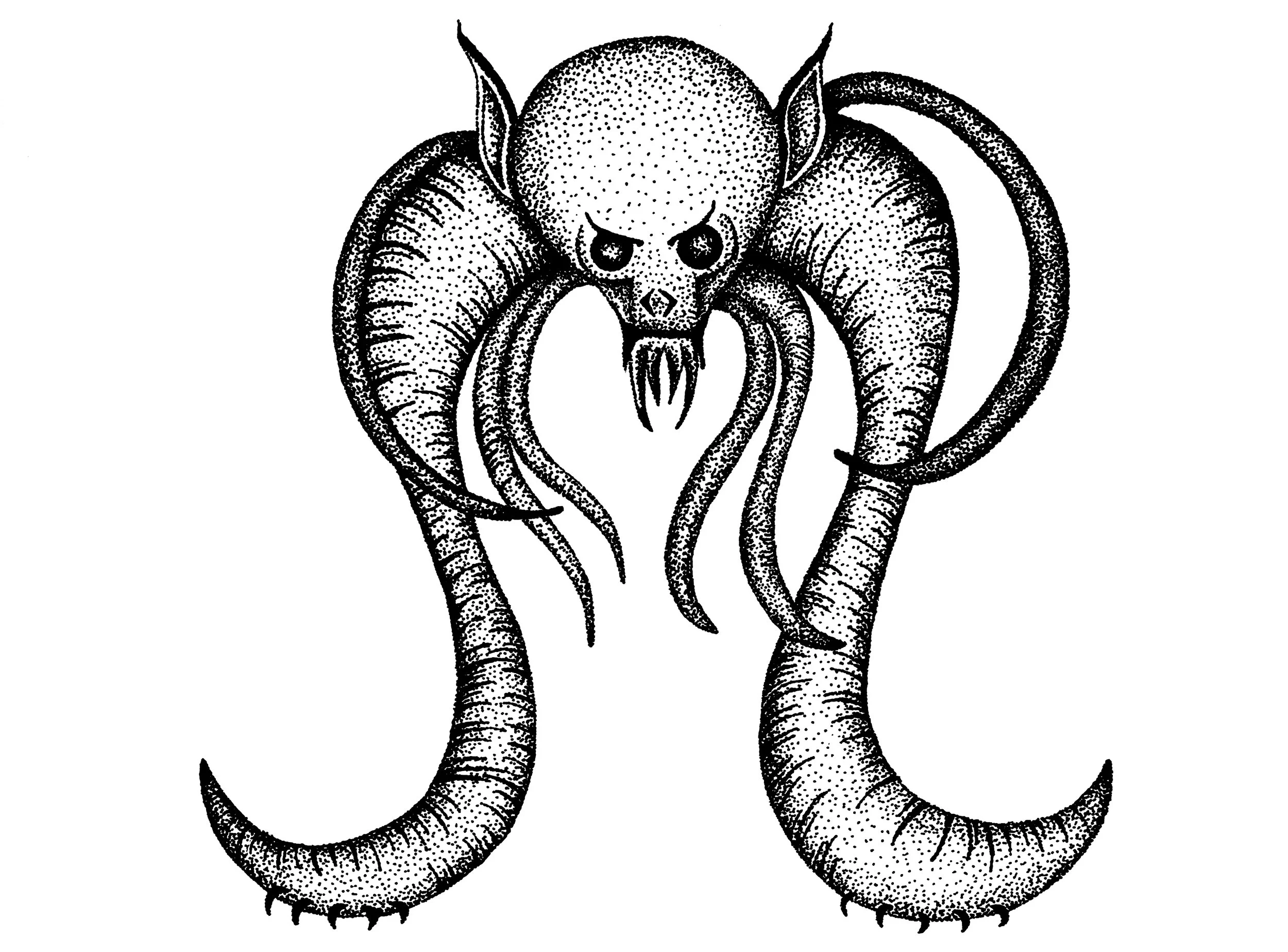
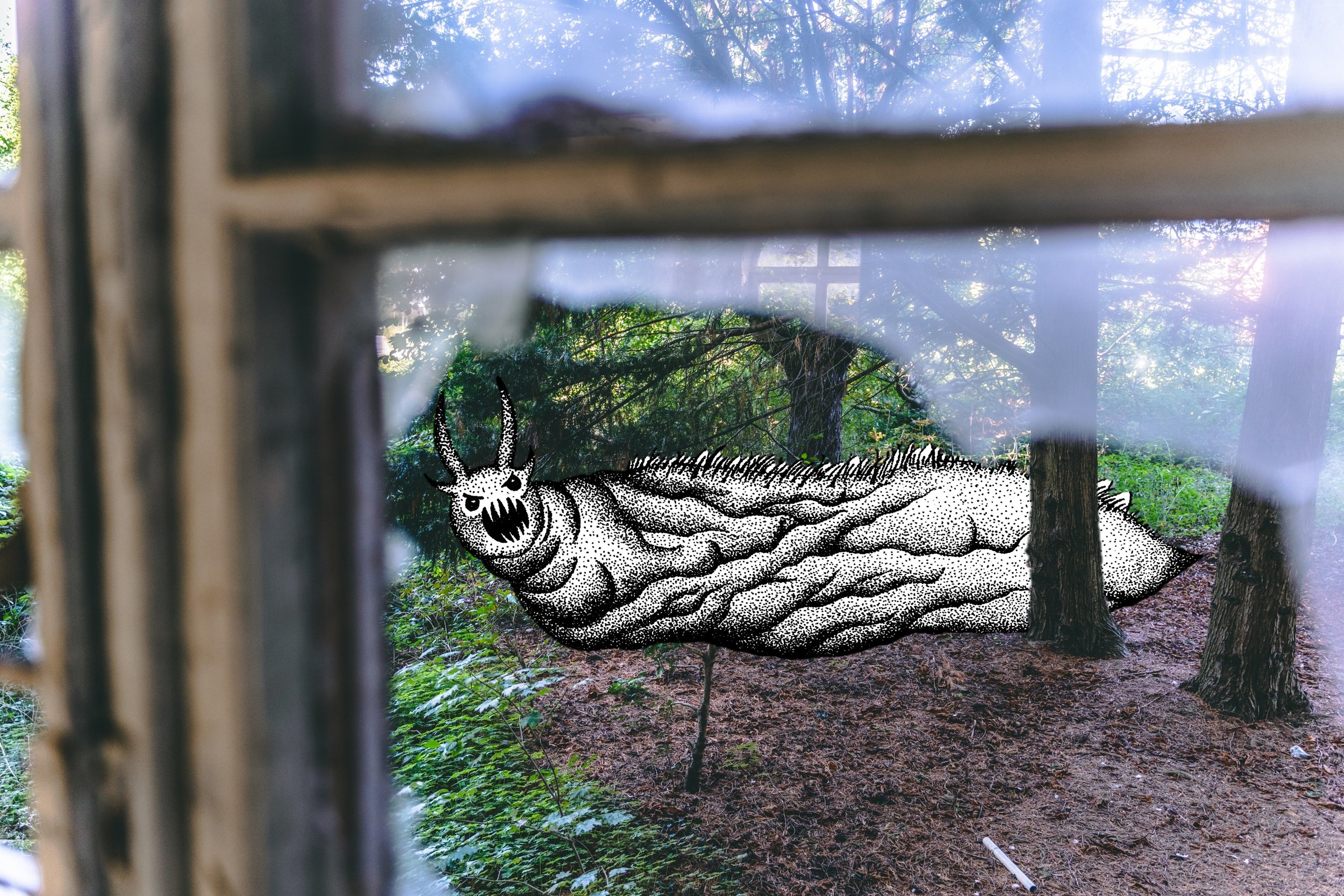
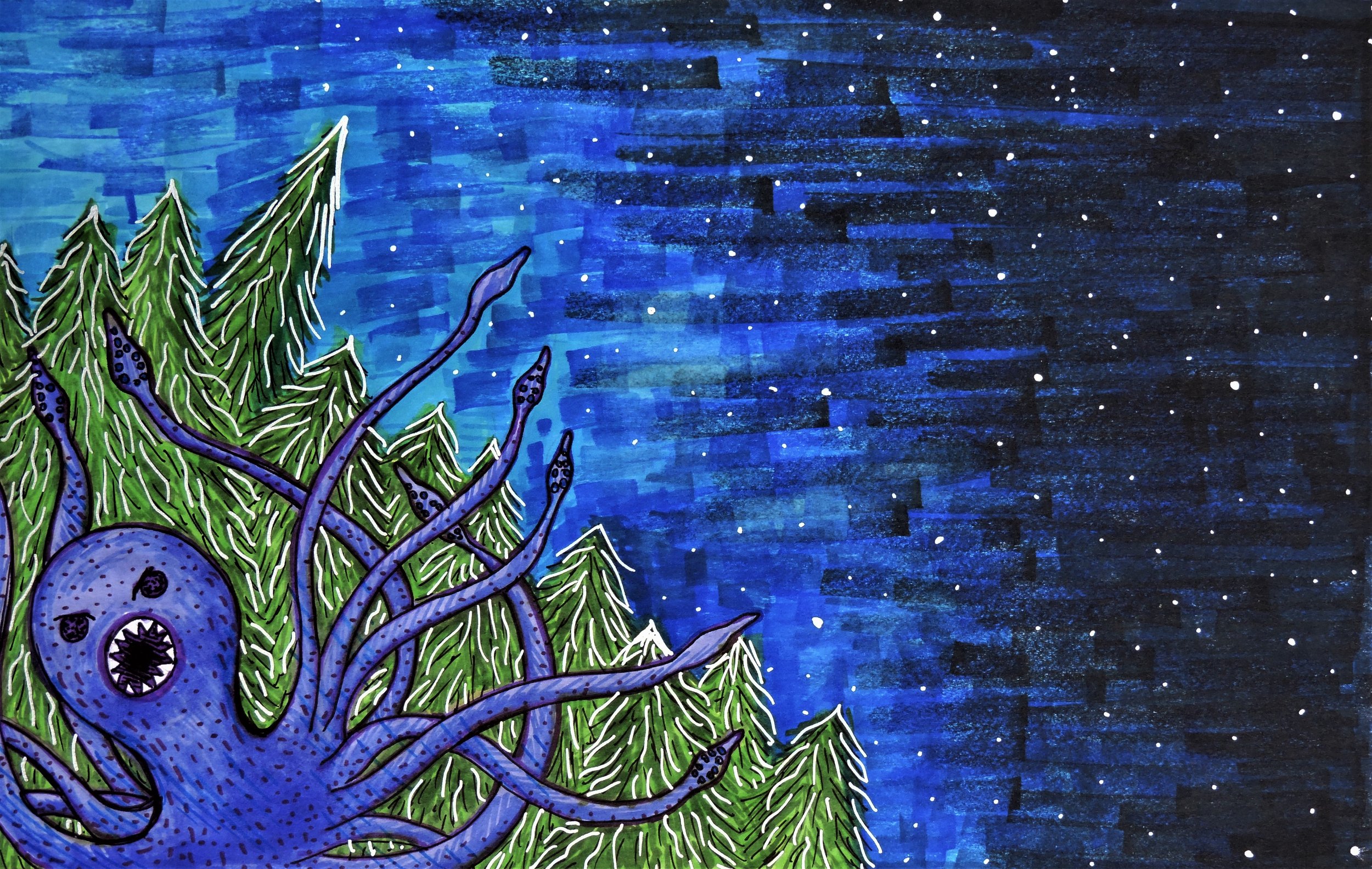
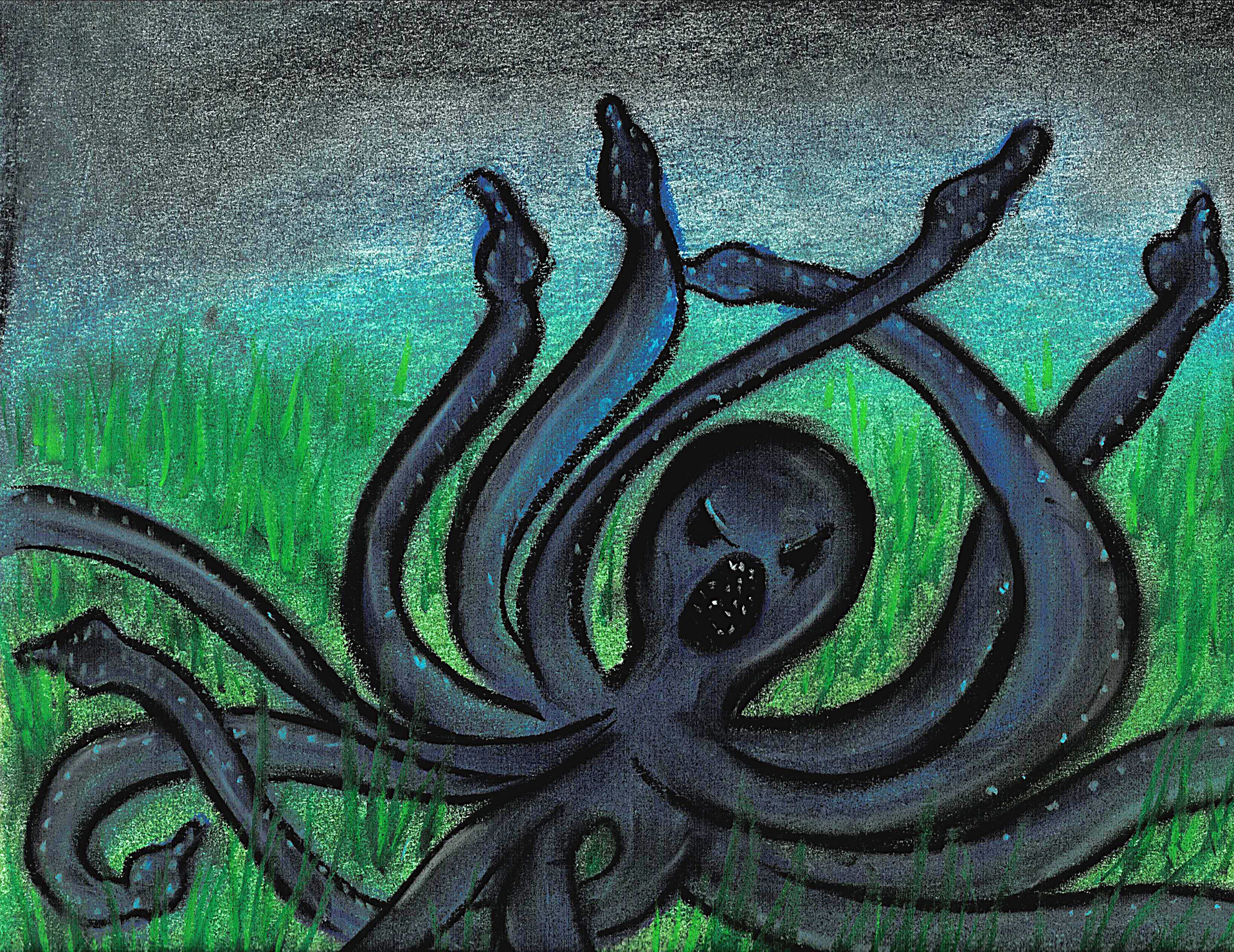
This was the first monster introduced! This creature is enormous, with purplish skin and twelve tentacles. It is voracious and quick, and will eat any living creature that gets in its way. They are luckily quite rare. This is also the first monster drawing I ever did, and what convinced me to continue with the style of stippling.


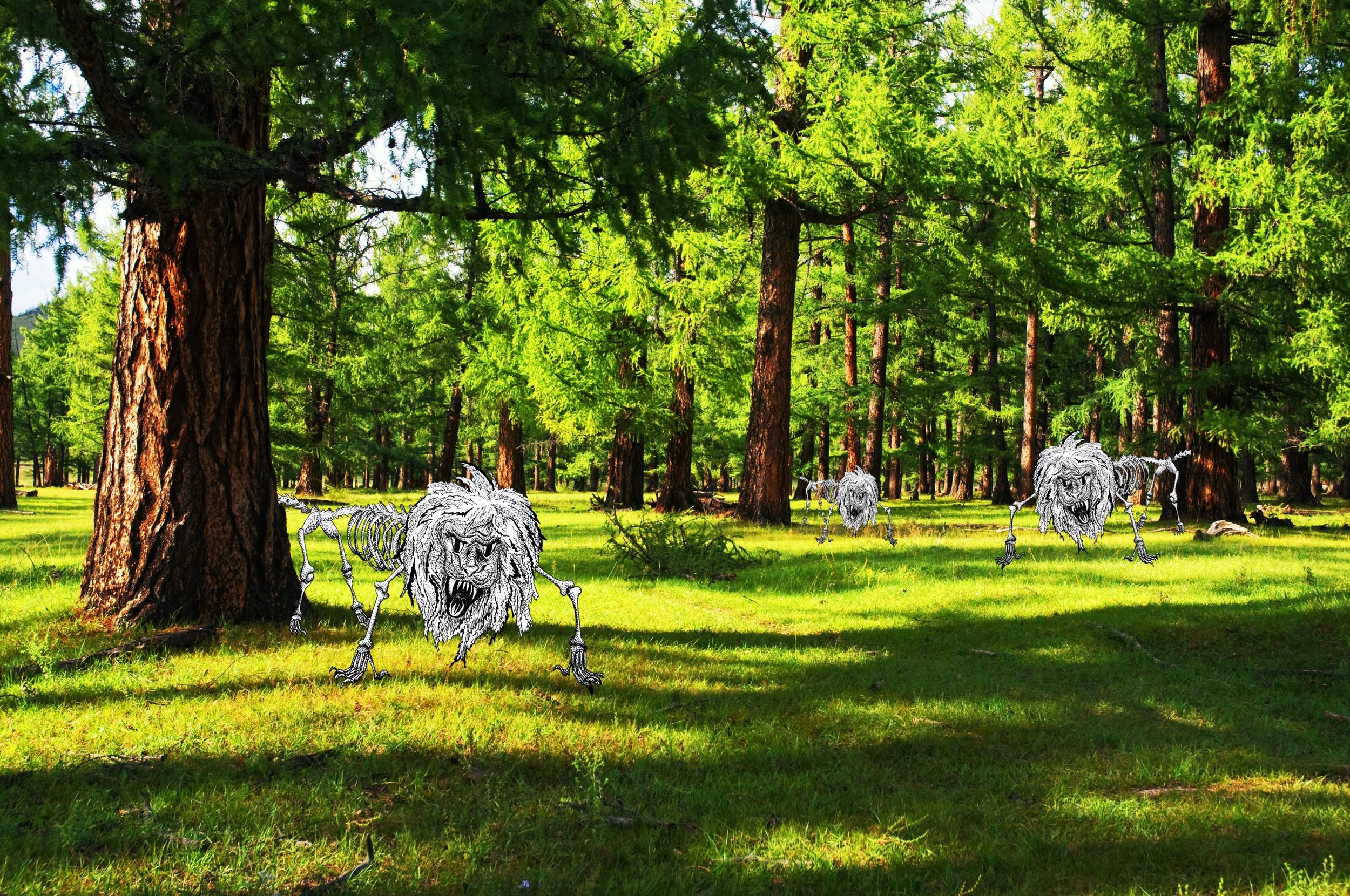
Rarohan

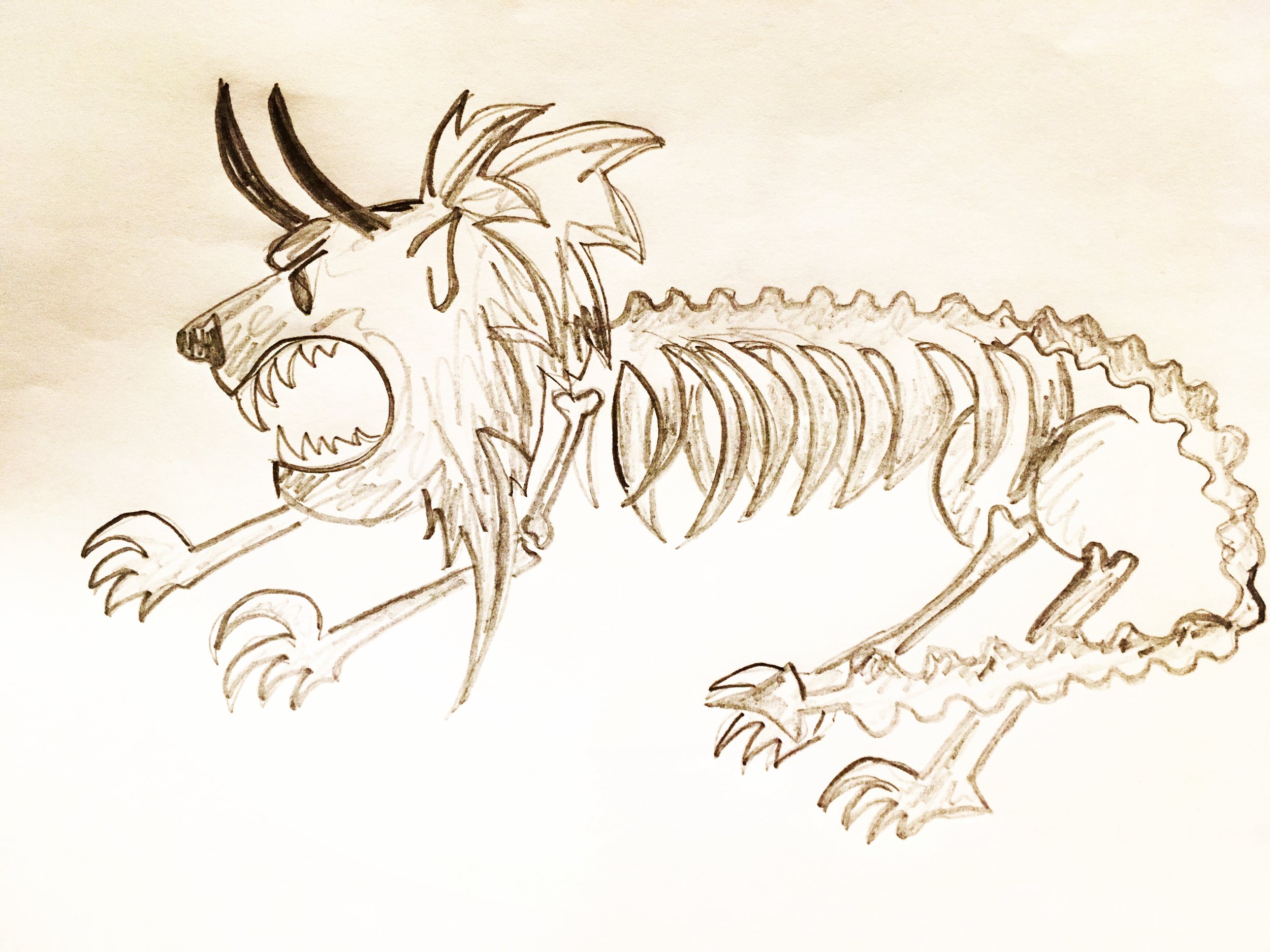
In the first draft of Tentacles and Teeth, there were no rarohan. This monster was added in editing. It was, however, still the second drawing I ever did. Drawing the rib bones gave me quite a headache lol.

Fun fact: Later, when I began using my drawings as part of digital illustrations, I became annoyed with myself that I had cut off the tail in the original drawing. Why, me, why?

Gamba

The gamba might be one of my all-time favorite monsters (after Polly, Arrow, of course). I think they are hilarious, and whenever I do a live reading of my work, I always pick the scene where Askari pokes a gamba with a stick.

Pok

One joke writers like to make is how they create terrible situations but then have to figure out how to get their characters out of them. The pok was one of those situations for me. I’d come up with what I thought was a creepy and cool monster (also a favorite of nine-year-olds at comic cons, in case you were wondering), but it was basically unkillable.

It’s dead now, but there’s a reason I didn’t bring it back later in the series lol

Kover

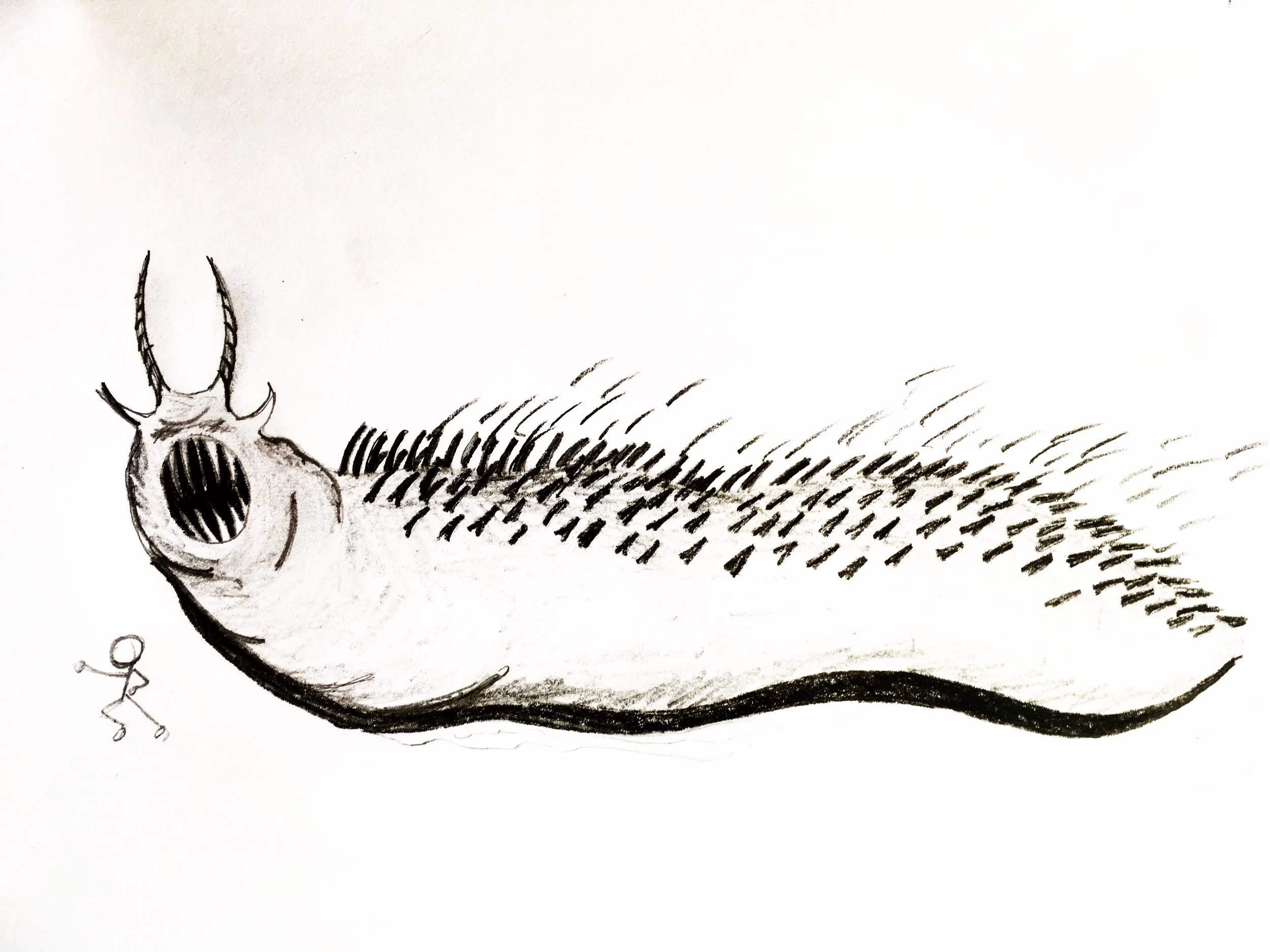
The kover is a favorite of a lot of readers. I liked the idea of a slow monster, but it had to have some way to protect itself. Enter: incapacitating poison and ejectable quills. Fun fact: did you know that porcupines don’t actually shoot their quills? The quills are more like spiky hair.

Hulla

Hulla were one of my creepier inventions, at least in my mind. I wanted something that would allow me to explore how we think about death, and here we are.

Fulek

The fulek was actually one of the last monsters I wrote for this book. Originally, there was a different scene here, with a lake monster. But the lake monster didn’t really have anything to do with anything. I instead needed a way to talk a little bit more about the Lamplighters, while also giving the reader a chance to get to know Minda just a bit more. I also wanted a monster that wasn’t inherently bad, to add some fuel to the fire of Askari’s changing mind, since that was one of the main themes of the series.

Gyiks

Gyiks! When I invented these, I wanted something easy to kill. I’d started off by making so many of the monsters in this series impossibly large, impossibly strong, and impossibly everything. So then, I made gyiks. Of course, I didn’t want it to be too easy, hence the horde.

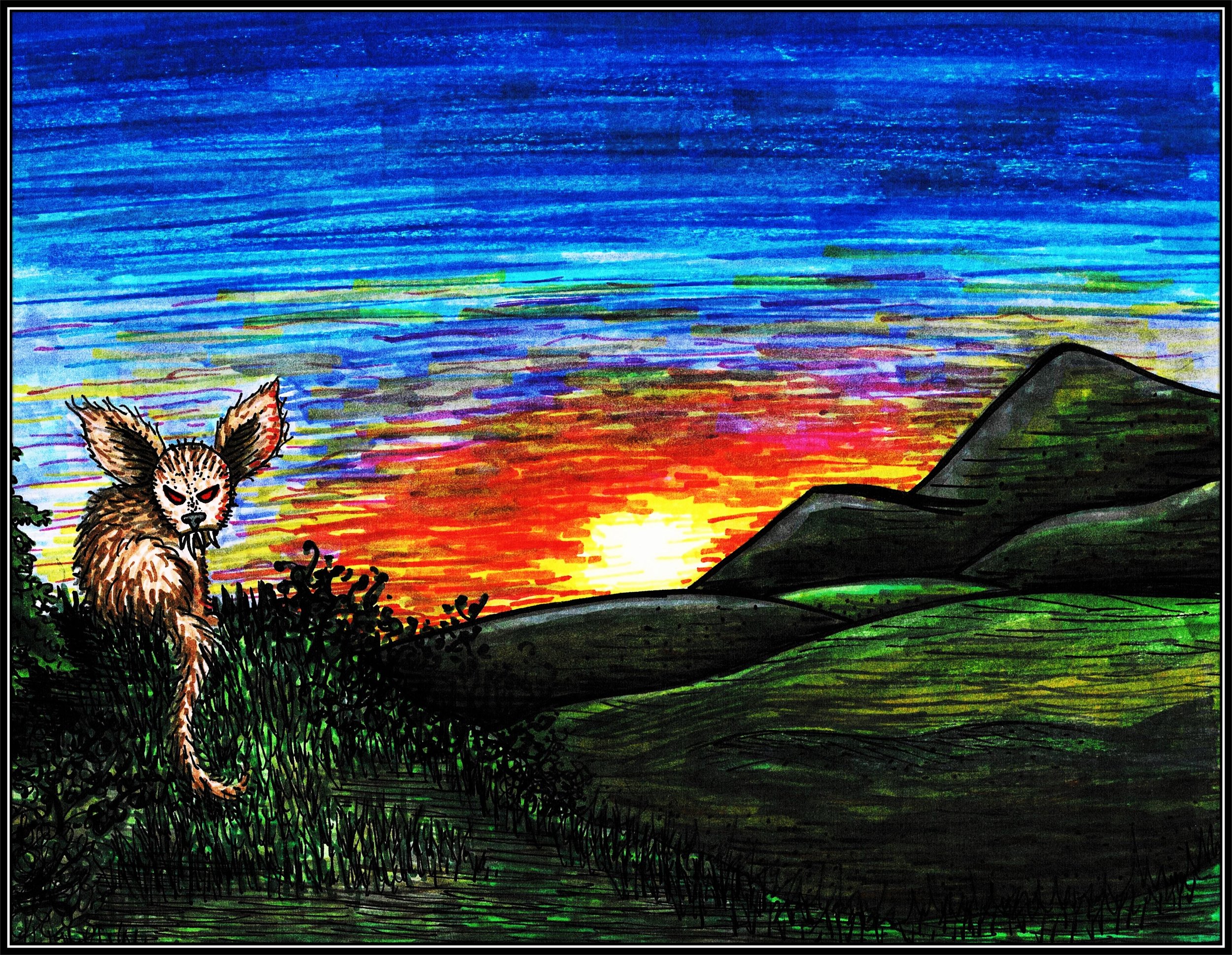
Another fun fact: this was the first color monster illustration I did! I ultimately decided not to do them all in color, because it took me a lot longer than black and white.

Barlang

The barlang represents a significant shift in my mindset as I was writing Tentacles and Teeth. It was the first monster I wanted the reader to feel some kind of compassion for. I’ll be honest, if I were a monster, I’d be a barlang. I want to live in my cave, eat cave lichen, and be left alone. If a bunch of humans took up refuge and then attacked me, I’d probably be pretty pissed.

I still feel a little sorry for this creature, and sometimes wish I had found a way to let them live.

Elnok

Elnok! Was my way of humanizing the hulla, to provide some nice, round, fat cognitive dissonance for Askari. Wait, these creepy AF monsters have a queen? Some semblance of a society? And Minda is friends with them? Yup. I love cognitive dissonance. It’s why I’m an absurdist, I guess.

Minket

And here we have everyone’s favorite, adorable, little companion: a minket!

Polly is a great monster. She’s clever and fun and funny. And Dreadnaught—what a gem.

Polly was designed to be one of the most significant nails in the coffin for the beliefs Askari was raised with: that all monsters are evil and bad. Which was also a theme I wanted to explore in the book in general. So many of the ideas and ideologies we are taught are presented in black and white terms: good or bad. But the world is a lot more complex and nuanced than that, and my personal belief is that one of the most important things we can do as humans is learn to accept nuance and contradiction.

And Polly is the manifestation of that belief.

A Few More Monsters

Those are all the main monsters in Tentacles and Teeth, but I’ve done a lot more art than just those eleven illustrations. So below, enjoy a slideshow of a few of the other pieces I’ve done over the last few years! And stay tuned for a post about City of Dod!

Sign up for my newsletter for more updates on my work!

End of April Update

Happy May! April was an excellent month for me, and I’m just now starting to recover from it.

It was Camp National Novel Writing month, which is an offshoot of the regular NaNoWriMo, and tried something new—practicing intuitive writing. I won't get into all the boring details, but essentially, there are two kinds of writers: those who plot everything out in advance and those who don't (technically, there are lots of subcategories of those groups as well, but I digress). 

I am a writer who doesn't plot things out ahead of time, and I've always fought with it. I've read a couple dozen books on plotting, taken courses on it, even taught courses on it, and it never worked for me. So the last couple years I've been leaning into intuitive drafting more and more, trying to work with my brain rather than against it, and it's one of the best writing choices I've ever made.

Last month, I dove in with both feet. The goal was to simply write whatever I felt like, however I felt like, whenever I felt like. And the results have been astonishing.

By the end of the month, I clocked nearly 105k words written. For reference, the goal for a regular NanoWriMo is 50k, and during a typical camp, I tend to aim for 30k. My books tend to range between 60k and 80k words.

I wrote across several projects simultaneously: a series of short fairy tales by Ariele (see the cover images); a longer fantasy novel in a new world, new series; a book on intuitive writing for writers; and a short story set in the Land of Szornyek world about Askari's mother. 

I have several other projects on the horizon as well. I just got back my proofreader's notes on Book 7 of Land of Szornyek, so you can likely expect that within the next couple of weeks, depending on whether or not I do a map to go with it—if you want a map of Askari's world leave a comment, and if I get at least 3 replies either here or via email, I'll definitely do it.

In addition, I'm working on scheduling the proofread of the secret trilogy I've been talking about for three years, now titled Aria's Song. The plan is to launch all three books of the trilogy at once sometime in July, though that will depend somewhat on how well I can get my act together. 

And soon, I hope to have another update on the Rove City series, so keep an eye out for that. 

At any rate, my April was great. High word count aside, I also played piano nearly every day, planted some stuff in the garden, finished a few major house projects, and had a nice visit with my father-in-law. So yeah, feeling pretty good.

Now that May is here, I’ve spent a few days recovering (that many words is like running a month-long marathon), and am trying to catch up on all the things I ignored. I have a couple more blog posts in the queue as well, so stay tuned!

Or click here to sign up for my newsletter!

The Wolf Princess: An Excerpt

Update 5/27/2022: Read the full story here: https://books2read.com/u/mV8eXr !

This month, for Camp Nano, I’ve been working on a series of fairy tale short stories, among everything. Here is a quick excerpt. The whole thing will be available soon, so stay tuned!

The Wolf Princess

Once upon a time, King and Queen Acron of Balini birthed a beautiful daughter with pitch black hair. They had spent many years trying to conceive, and when they were finally successful they were ecstatic. However, on the day of her birth, the evil enchantress Liaandra the Bold strode into the castle, miffed that the King hadn’t paid her wages, for back in those days, she worked as a powerful battlemage on behalf of the royal family. But surely, so the story went, the King couldn’t be expected to remember something so paltry as wages on the day of the birth of his daughter, a much long-awaited event due to the queen’s struggles to bear children.

But Liaandra the Bold was most displeased, and as the King and Queen stood at the head of the throne room, ready to introduce the child to the court, her words echoed, “You dare treat me so, my liege?” Her voice was tinged with a vile sneer. “Throw me to the wolves, and so too shall your daughter be thrown to the wolves!”

And then she strode from the throne room in fury, her emerald green cape swirling in the wind.

At first, everyone thought they were just the ordinary words of an angry enchantress. But that night, the wolves outside howled fearfully in the gusty windy night. And the next night, the creatures drew closer to the castle, and the next night, even closer.

Of course, the king and queen had no intention of letting the wolves anywhere near their daughter. So they put out a bounty: any man or woman who brought a dead wolf to their doorstep would be paid a handsome sum. And as their daughter grew in age, wisdom, and stature, they resolved never to let her outdoors, nor anywhere near where she might encounter a wolf.

But their plans were ever foiled. Not a single man nor woman managed to successfully capture, maim, or kill a wolf, though the entire kingdom could clearly hear their howls from the forest and see their paw prints in the snow. And when the princess was a mere five years old, she sneaked out from under the watchful eye of her nursemaid, and made it all the way to the courtyard before anyone caught her.

Her parents added more guards, more nursemaids, and more servants to keep a watchful eye on her, but when she was eight, she escaped again. This time, they caught her all the way at the castle wall. And when she was fifteen—well, at that point, she was too smart, too clever, and too motivated, and she vanished without a trace. It was the middle of the winter, and on the night of her departure, and they tracked her footprints deep into the forest to a clearing, where they were most distraught to find the prints of dozens of wolves.

###

They said it was a curse, but for the life of her, Princess Sable couldn’t understand why.

The wolves, she discovered, were kind and gentle, soft and warm. For as long as she could remember, she listened to their song in the distance, a beautiful strain that swirled in the winter wind, danced among the conifers, and harmonized with the golden light of the full moon. And every time she had opened a window, or even dared simply to peer out, a nurse or a servant or a governess would rush over and slam it shut in her face.

There was to be no listening to the wolves, they told her, or even thinking about them, and every story book, history book, painting, and tapestry which featured wolves of any kind was removed from the palace as soon as it was discovered. And while Princess Sable’s life had been comfortable, she found it severely lacking. It was as if there was a hole inside of her she needed to fill.

When she ran away at age five, it hadn’t been with ill intent. She’d only wanted to hear the whispers of the wolves a little more clearly. And when she was eight, she’d wanted to meet one. At age fifteen, however, her motivations had been a lot different. For as fearful as her parents were of the great beasts of prey who prowled their kingdom like invisible demons, the truth was, Sable was tired of being protected. She had barely had a moment alone in her entire life. She had no free time, no alone time, and even her social life was carefully regulated by the king and queen.

What she wanted was a little freedom.

Any freedom at all.

And she knew, deep inside, that the only place she would find that freedom was with the wolves.

So, on the eve of her fifteenth birthday, after many weeks and months and even years of planning, she slipped from the castle and made her way to the woods. She didn’t feel the cold of the wind nor the icy burn of the snow underfoot—only the thundering of her heart and the rush of pleasure at finally being free.

And when she arrived in the clearing, the wolves waited for her, panting from their own race through the wintery wood, and then led her to their den in the far reaches of the kingdom.

No, Princess Sable soon learned, it was not a curse at all. For the magic of the great enchantress wrapped around her like warm boots and gloves. It gave her warmth and safety even as snow swirled around her and ice formed on the trees. It sneaked into her mind in the form of knowledge—of how to light a fire, how to cook food, how to trap smaller animals, how to forage for edible plants, how to boil water. And as she matured in age and beauty, so too did she mature in skill, strength, and determination.

The king and queen, however, lamented the loss of their daughter. They renewed the bounty on the wolves, with an even higher sum, and added one caveat: whoever could bring their daughter back from the grip of the wolves would be rewarded beyond measure. Many speculated about what they meant by that. Some thought they were offering riches, others preferred a title, and some even considered that the king and queen intended to offer the princess’s hand in marriage to whomever could find and save her.

The princess, of course, knew none of this. She now lived with absolute freedom and abandon, protected by the gift the enchantress had given her, and never lacking for companionship. For all the woods of the forest were at her beck and call. And together they roamed and ran and thrived.

But one day, everything changed. She and the wolves were out for a run when they stumbled upon a small cabin in the woods, and coming from inside, Sable could hear the small cries of what she thought was a child. She bade the wolves to wait quietly while she sneaked up to the cabin and peered through a small window. She was shocked to see not a child, but a woman, of middling age, sitting in a chair by a roaring fire and sobbing into her hands. Her cries racked her whole body, and Sable felt a well of compassion sweep over her.

So she knocked on the door.

“I saw you weeping,” she said by way of greeting. The social niceties she’d learned as a princess weren’t more than a distant memory at this point. She didn’t even know how long she’d been gone from her life as a princess. “Can I help?”

“My dear!” the woman exclaimed. “Come in! You must be freezing!”

Sable looked down at herself and for the first time since she’d run away, realized how she must look to others. She wore a thin dress, full of holes and covered with dirt; her black hair, while she washed and braided it weekly, was nearly to her knees in length and full of sticks and leaves; and she wore no shoes.

“Oh no,” she assured the woman, even as she willingly stepped into the cabin. “I am fine. I am protected. I was merely concerned for you.”

“You’re too kind.” The woman’s eyes and cheeks were reddened by the tears. “Perhaps I could give you some soup?”

“I haven’t had soup in…” Sable trailed off. She couldn’t remember how long it had been since she’d had soup. “May I ask why you were crying?”

“My husband has left,” the woman replied. “And I fear for him.”

“Where has he gone?”

“He says he has gone to improve our fortunes,” the woman replied, “but I think he has gone on a fool’s errand.”

“Improving your fortunes doesn’t sound too bad,” Sable said. “What does he plan to do?”

“He plans to find the lost princess,” the woman said.

“Oh.” Sable frowned. “Why? Has she done something wrong?”

“Have you not heard?” The woman once more glanced at Sable’s attire. “Surely not, if you are living in the woods. Many years ago, when the princess disappeared, the king and queen offered a handsome sum for her return. But none have found her.” The woman sighed. “It has been seven years, and now the queen is ill. She will bear no more children and the king must name an heir to the throne. They have put out one last call to find her, and if she does not return, then she will be presumed dead and the king will name a new heir.”

“Your husband thinks he can find the lost princess?” Sable asked, growing concerned.

“He wants to try,” she said, “with a hope of earning the riches promised by the crown.”

“I see.” Sable took a sip of the soup. “And why did you not go with him?”

“How could I?” the woman asked. “And give up our home and gardens and everything we have worked so hard to build together?”

“Is your home and garden more important than your love for him?” Sable asked, not looking up from her soup. It was quite delicious.

The woman sat quietly for a few moments. “I suppose not.”

“Perhaps you should go after him,” Sable said. “Has he been gone long?”

“Only a few days.” The woman looked at Sable curiously. “And what of you?”

“I am only passing through,” Sable said. “But wanted to make sure you were okay.” She drained the last bite of soup. “I will leave you to your tears.”

“Wait,” the woman said. “If… if I were to go after him—survival would be difficult. It is frigid cold, and taking such a long journey alone would be difficult. If you know these woods well, perhaps you have a thought for how I might take such a journey on my own.”

“Oh.” Sable thought for a moment. “I suppose I could help you.”

“You could?” the woman exclaimed. “Would you?”

Thus, Sable agreed to escort the woman to the edge of the great forest.

Stay tuned for updates!
Click here to sign up for my newsletter to find out when you can get the rest of the story!