
With the world upside down and everyone stressed, being creative seems like a simple way to destress. But how are we supposed to create when we barely have the energy to get out of bed in the morning, make sure the kids get dressed, or take a shower? It’s a paradox: being creative helps to destress, but how are you supposed to be creative when you’re too stressed to create?
Let’s start with a metaphor.
Imagine that you’re camping. Or if you hate camping, imagine that you’re trapped in the woods and you didn’t have any choice in the matter. At any rate, you accidentally let your fire burn down to nothing, and all you have left is one remaining red-hot coal. And then it starts to rain.
That coal is your creativity. And the rain is stress.
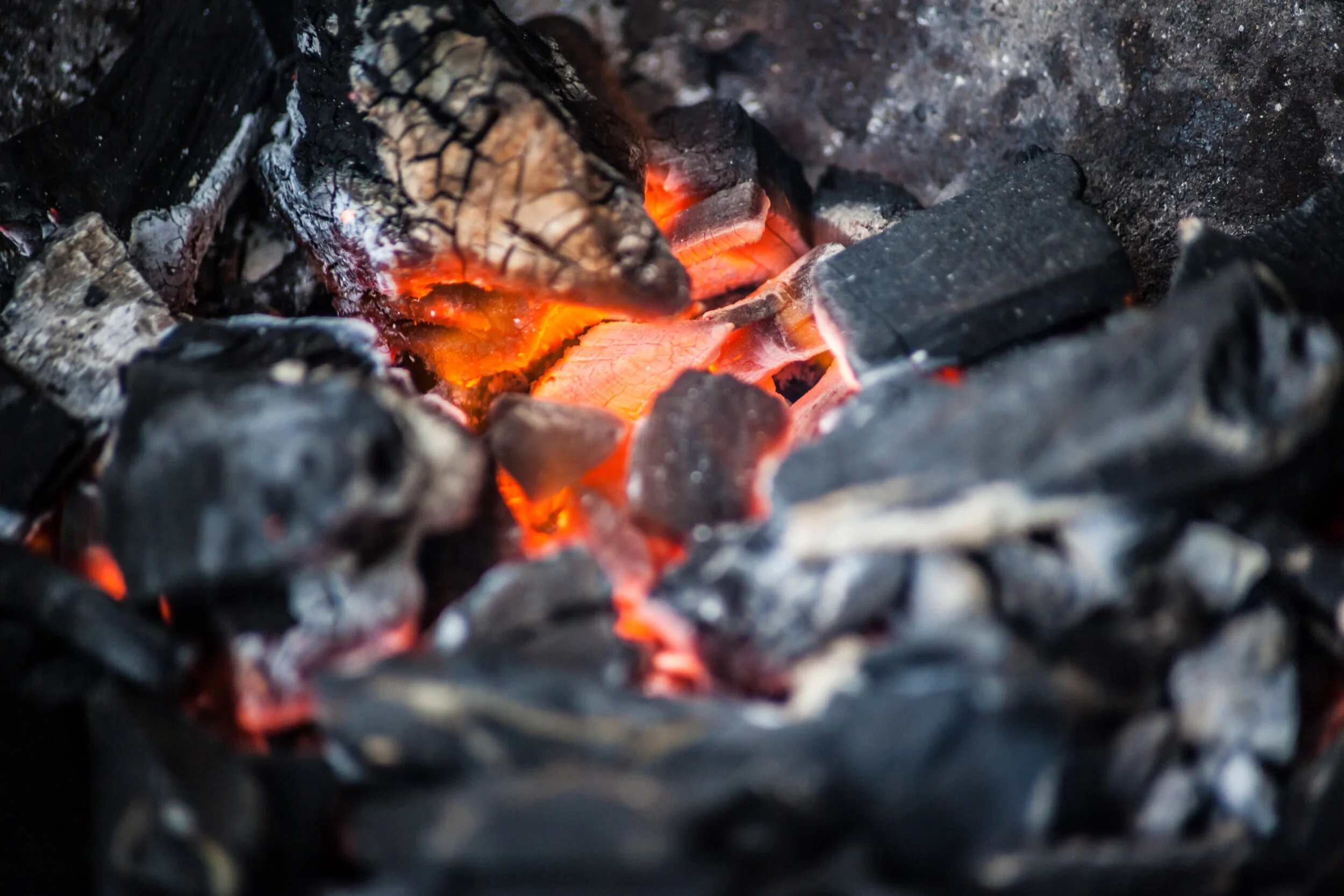
I believe that every single one of us was born with a red-hot coal inside of us. Some people ignore their coal, and that’s perfectly fine. Not everybody needs to be creative or feels a connection with the creative part of themselves.
But for those of us who want to be creative as a strategy for reducing stress, our goal is to use that hot coal to build a fire to drive away the rain.
The trick, then, is figuring out how to start a fire in the rain.
Tip #1: Remember that creativity is not productivity.
There is a battle going on right now on the internet: some people are recommending that we use quarantine as an opportunity to be productive, be creative, and to pursue our passions. On the other side of the debate, people are saying, no! We are in the middle of a pandemic! We need to give ourselves a break.
The problem is that this is a circular debate where both sides are right sometimes, and wrong sometimes. It really depends on the person and it can even vary day to day. Sometimes I wake up raring to go; other times, I wake up hating everything. Whether or not it is a day for productivity or a day for self care depends on me and only me.
Creativity often falls under the category of self-care. But I think it also sometimes feels like it falls under the category of productivity. Because “to create” and “to produce” are synonyms.
But creativity and productivity are NOT the same thing.
So what is creativity then, if not productivity?
Creativity is simply the use of your imagination.

Perhaps painting is about producing something. Perhaps making music is about producing something. Perhaps writing is about producing something. Every single art form may end up with a product of some kind, but it starts with creativity. And creativity is not about producing anything.
Think of it this way: You can use your fire to cook food, but it’s still a fire even when you’re not cooking.
You can be a wonderful, beautiful, creative soul, with a blazing fire that never goes out—and never produce a single thing.
At it’s core, creativity is about what goes on in your head, and nothing else.
Tip #2: Start small.
Let’s say you have an actual hot coal and you want to start an actual fire. I’m being literal here, but will soon shift into metaphor again, don’t worry.
How do you do it? How do you start (or restart) a fire from a hot coal? Simple.
Watch this guy do it:
The answer: you feed it.
The trick, however, is in what you feed it with. Don’t feed it logs. Logs won’t work. Don’t feed it metal or water or an entire tree.
The trick is to feed it something tiny, something flammable, and something that is going catch fire really, really, really easily. Like twigs, dried leaves, or pieces of paper. And you do this until the flames are big enough to add slightly bigger twigs, and eventually logs.
I will repeat it: you start a fire by using something that will burn easily.
The keyword here is “EASILY.” When it comes to creativity, what is easy for you is different than what is easy for someone else. So if someone says, “this activity is guaranteed to get your creative juices flowing!” they’re probably wrong.
I’ve brainstormed a list of a bunch of things that have helped me add little dry twigs to my fire at different times over the course of my life. I’ve split the list into writing-related things, and non-writing related things.
Some of these things may work for you. Others may sound stupid. Perhaps none of these things will work for you.
The key here is to do a little brainstorming of your own. Think back over the course of your life. What sorts of things have you done to inspire creativity? what has worked for you? And if you can’t think of anything, then conveniently, here’s a list. Work your way through it one item at a time and see if anything sparks.
Non-Writing Examples
Do a Sudoku or a crossword puzzle.
Watch a show or documentary or movie that you would never watch. If you’re feeling up to it, take notes on anything that interests you.
Color. In an adult coloring book. Or a kid’s coloring book. The wall. Whatever you feel like.
Bake or cook something new.
Take pictures of things. Like birds or trees or your kids. The act of looking for moments to photograph is an excellent creative exercise.
Do a kid’s craft.
Draw a picture.
Go for a walk and making a list of all the green things you see. Or the square things. Or the upside-down things. (Text a friend and ask for an adjective of things to look for.)
Daydream. Invent a realistic or completely unrealistic scenario.
Try a new activity. Paint along with a Bob Ross video. Try a new exercise video. Browse Youtube for ideas.
Plant something.
Identify a problem. Any problem. And solve it.
Teach your dog a new trick.
Knit something. Sew something. Crochet something. Create art in a different medium than your preferred one.
Writing-Specific Examples
You’ve probably heard most of these before. I know for me, as a professional writer, I tend to ignore generic writing prompts or dismiss them a stupid or as a waste of time. Like freewriting. I personally really hate it. But when I get into a funk, sometimes these are the only things that can get me out of it.
Freewrite.
Do a writing prompt. Use an online generator. Like this one.
Make a list or a list poem.
Read an article or book about writing.
Try writing in a format that you’ve never tried before. Change the fonts. Maybe by hand instead of a computer. Maybe try plotting, instead of discovery writing or vice versa. Try a new genre.
Start a daily journal.
Pick a new word a day to learn.
Read a new thing—book, blog, article.
Offer to read a friend’s work; say only positive things about it and try to draw inspiration from them [note: do not plagiarize].
Draw a picture of your work in progress or a scene from it. Photoshop a scene from your book. Surf stock photos and find one to inspire a new scene.
Write one word a day for two weeks and see if you can turn it into a poem.
Write down a dream that you had.
I could literally come up with these all day.
The thing to remember, whether you’re trying a writing-specific activity or a non-writing-specific strategy is that it is OKAY to do it badly. You’re not trying to prove anything or be better than anyone else or write the next great American novel.
You’re trying to feed your fire.
Tip # 3. Break it down.

One problem I’ve had repeatedly throughout the course of my life is that writing projects are just so BIG. I once calculated that for every book I write, I spend roughly 300 or more hours on the drafting, editing, and publishing of it. And this is a recent number, after years and years of practice and millions of words drafted. 300 hours seems like so many. A whole novel or memoir seems like so much!
It used to be I couldn’t even write a couple hundred words in an hour—but now my new record is 1200 words in 20 minutes. This is after years and years of focused and deliberate practice (not to mention, I learned to type before my brain finished developing). But even that, which is pretty epic if I do say so myself, is still only a tiny fraction of an entire novel.

One trick you can use is to break it down into the tiniest steps you can. One word at a time is a little bit too small, but if you write a paragraph a day, or 50 words a day, slowly a story will start to emerge.
You don’t have to write 1k per day, or 1.6k (like during Nanowrimo). Perhaps you don’t even start with words—you start with a plot point, or an drawing of a plot point. Or perhaps, since we’re trying to ignite a coal here, start with a smaller project. Write a short story. Write a poem. Pick a smaller goal.
I’m going to bring back the fire metaphor. You don’t dump a log on a coal. You add some sawdust first, or some paper. You build a little log cabin or tee-pee out of twigs. Then you add slightly bigger sticks, and slightly bigger ones again. Then small logs. Then medium logs. Then log-sized logs. And once you’re there, if you have entire trees you want to burn? Maybe then you can give it a go.
*NOTE: I do not recommend burning actual trees. It’s much safer to cut them into log-sized pieces first. It’s also helpful if you let them dry out first. I also don’t recommend burning anything unless it’s done in a safe way, and you have water handy should it get out of control. Also, please don’t burn down buildings, and check all local regulations before making bonfires. And please keep in mind, the fires I’m talking about here are METAPHORICAL. Remember… Only YOU can prevent forest fires. Thank you for coming to my Ted Talk.
Tip #4. Don’t rush.
One thing I’ve found, is that sometimes I just desperately want to be creative, so I create something just for the sake of creating.
Sometimes, this is perfectly fine and it gets me into the state of mind I need to be in. Other times, I feel like crap and hate whatever I created and then I just get grumpy and watch TV instead.
But if I take it slow and really think about what I’m doing, I never feel bad about it—even if it doesn’t turn out to be my greatest work.
A few tips on taking it slow:
Plan a chunk of time, if you can. If you spend three hours writing and only write a hundred words? That’s perfectly fine.
Do something unplanned or unplotted. An example of this is that I like to make quarantine art. I don’t visualize what it will look like ahead time—I just draw one line at a time until I make a picture. Discovery writing is another form of this. Don’t know what’s coming next? Perfect. Just write one word at a time and see what happens.
Conversely, plan out the whole process of a thing before you do it. Write it all down, step by step, scene by scene. Draw yourself a map so you know exactly where you’re going.
Above all, forgive yourself for not being productive or creating something that looks like crap. It’s not a competition. It’s not Keeping Up With The Joneses. It’s not about becoming a millionaire or famous. It’s about feeding the fire.
I think if I want to end with anything, it’s the idea that as creators, we need to take care of ourselves first. And what that looks like is going to vary from person to person.
You may need to watch a lot of TV and take baths. Do it.
You may need to go for a lot of walks and do a lot of mediation. Do it.
You may need to force yourself through a project you don’t feel like. Do it.
You may need to stop working on a project that is difficult and try something new. Do it.
You may need to do writing exercises or meet with your writing friends (virtually). Do it.
You may need to focus on a different form of art, like painting or music or dance. Do it.
You may need to give yourself time to breathe or grieve or focus on your family or work. Do it.
Your red-hot creative coal is not going anywhere, and it will never go out. It will always be there, whenever you’re ready to feed it.