
Ariele University: A Whack On The Side of the Head

Logo-5.JPG

I know you haven’t heard from Ariele University in a while, but I’ve been working on it, slowly plugging away in the background. I’ve made progress on a few of the books I’m reading (about halfway through a couple), have done two more assignments, and figured out what I want to do for my thesis! More on that after I’ve gotten a bit more of my readings done, though.

In the meantime, let me introduce you to A Whack On The Side of the Head by Roger von Oech. This book was originally published in 1983 (though I have the 1990 edition), and is a bestselling classic on how you can become more creative. I’m not sure I need to become more creative, exactly, but I figured that it certainly doesn’t hurt to have a few more tools in the toolbox. The book has “puzzles, anecdotes, exercises, metaphors, cartoons, questions, quotations, stories, and tips; this book systematically breaks through your mental blocks and unlocks your mind for creative thinking.” That’s what the back of the books says.

Anyway, the reason I added this to my list was because I owned it, and thought it might be a sort of unnecessary side concept—like a gen ed course in undergrad.

My assignment (you can see updates to my progress here) was to do three of the assignments listed in the book. I have them included below.


The Assignment

1. Metaphors.

This chapter talks about hard and soft thinking. Put each item from the list on page 34 into one of the two categories, either Hard or Soft, along with an explanation of why you put it there.

HARD

Logic— creates a set of rigid guidelines to help direct a thought process or idea

Reason—the process that creates the guidelines, which now that I think about it might actually be more soft because it involves exploring a variety of ideas, following bunny trails and tangents—but hard because it all has the goal of creating something very tangible and accessible

Precision—hard, as in difficult, but also in exact and solid; it means understanding all the details of the situation and medium

Work—difficult and not fun in most cases, also guided by a specific set of rules and guidelines

Exact—same as precision

Direct—focused, forward, and no-nonsense; it knows itself and its needs

Focused—attention is all on one thing (or a cameras) creates a set of restrictions & blocks out other stuff, strict set of guidelines

Reality—there are rules, social and physical, that govern the world we live in and can’t be broken, like walls

Paradox—difficult to understand, but with a very specific problem to be solved

Analysis—subject to a specific set of rules

Specifics—specific lol

Adult—we are governed by the rules of our world and society, and are expected to be able to bear the brunt of the pain the world brings

SOFT

Metaphor—because it doesn’t translate exactly, there’s always wiggle room, room for interpretation and subjectivity

Dream—because its fuzzy, hard to grasp, hard to pin down exactly what’s happening and why

Ambiguity—because it’s flexible and leaves room for subjectivity and interpretation

Humor—room for subjectivity and interpretation

Play—because it’s fun, easy, and can take the form of anything; there are very few rules

Approximate—fuzzy, not sure, close enough but room for movement, wiggling change, not constant

Fantasy—not real, easy to change and manipulate

Diffuse—spreading outward, no central point, you can’t really tie it down or solidify its position

Hunch—it’s just an idea, not yet full formed, has no shape

Generalization—fuzzy, broad assessments based on loose patterns, and a ton of room for error

Child—they are small and while resilient, easily injured or affected, you can shape the way they think and feel and what they do, flexible


2. Be Practical.

Free write for 5 minutes about the picture of the chair on page 68. Include 3 impressions you have of its value.

IMG_6118[1].JPG

The chair has a back and a front, with a sort of triangle going through the center, and empty space on the legs, like it would fall down if you actually tried to use it. It has cushioning, which is probably comfortable, but the triangle through the center would make it very difficult to sit on, that’s for sure. And since the legs don’t really work, you’d have to balance on the bottom part of the triangle, which also seems less than safe. The only kind of person that would really fit in this chair would be two skinny people, one on each side. And the chair wouldn’t stand up with the legs broken like that. I’m trying very hard to find something good to say about it, but… Okay, here’s what you could do with the chair. Flip it 90 degrees, so that its back is on the floor. Then you can have two kids sit on it, with a divider between them so they can’t talk to each other, like if they’re siblings fighting or they don’t like each other or something. That might be a use for the chair.

This chapter is encouraging us to be open minded, but know when to reel in our imagination. Just because you can think of something (like this ridiculous chair) doesn’t mean the idea has value, or will turn out the way you imagined it during implementation. Yes, someone thought of this chair and even drew a picture of it, but I doubt it would sell, and it certainly wouldn’t be something to invest a lot of money in developing. So then, I need to practice recognizing when I have good ideas or bad ideas, and figure out how to determine which is which in writing. And I need to be willing to back down when my idea is, shall we say, less than stellar.


3. Mapping Dissatisfaction.

Go through each of the steps starting on page 171. Write a paragraph.

IMG_6119[1].JPG

What are you dissatisfied about?

I want to be a better writer. I want to be a better marketer. I want to make more money doing what I love (writing, reading, supporting authors, being a part of the literary community).

What are you going to do about it?

Well, I made up this fake master’s course to help with my skill. I started my Patreon plan to work on my marketing and BHAGs (big hairy audacious goals). I am making more money (not enough though) so I’m going to follow through on my Patreon plan, and work on refining my marketing plan so that more money goes into my bank account, and less goes out, and I’m going to write more books (strategy number 1).

Can you visualize yourself reaching your objective?

Yes! I have been trying to imagine what I will do with my time when not freelancing. I have imagined getting invited to do interviews and what I will do to engage my fans and followers. Sometimes it’s hard to believe that will ever be a reality, but I am going to stay focused on it as much as I can, and keep working.

What are three things you can do to reach your goal?

  1. Re-prioritize my education. I have sort of put it aside, but I want to refocus.

  2. Set time aside every week specifically for visualization (like Sundays when I listen to classical).

  3. Prioritize getting more books written. Sometimes I get distracted by marketing stuff. I need to focus on writing. More books = more money.

What three factors make it difficult to reach your objective? How can you get rid of these excuses?

  1. Stress. I am working on this—relaxation, regular exercise, better diet. It’s not perfect, but I’m way better off than I was before.

  2. Getting distracted. I could ditch FB again. [I did!]

  3. Thinking I’m a terrible writer. Practice positive self-talk!

What do you have at stake?

Everything. I quit my job to do this, and while I’m fortunate enough to have Josh to help with the bills, I need to press forward. The longer I go without having a job, “freelancing,” the less hireable I become (at least in my mind). I need to be successful, or pursue a different career track.

How can you create a support system around you?

What I already have: Josh, my parents and brothers, Zoe, Sarah, Deidre, neighbors, stability.

What I can work on: expanding my network, building a larger online community (and in-person community), not trying to reach out to everyone, but find people who are like me, growing fan base

How can you make your idea attractive to other people?

I think practicing blurb writing is going to be really important, and investing in high quality covers. I love the idea of drawing monsters, but I need to find a way to make my other series more appealing as well.

What gives you courage to act on your ideas?

A solid plan is nice. But I think most of my courage comes from Josh, who believes in me 100%, and my parents who give me solid, helpful feedback on my work.

What deadline can you give yourself?

End of the month, baby! I have to have 35k by the end of the month, and I’d like to put this Sagittan book out by next year. I also want to have the next LoS book drafted by the end of the year, so I can get started with the chapter releases not too long after Book 1 ends.

What resistance do you expect to your idea?

Not everyone will like it. I will get negative reviews, no matter how good I think it is or how much work I put into it. But I need to ignore all that stuff, and focus on being the best I can be, and producing the best quality product that I am capable of producing.

How persistent are you?

Very, and becoming more so every day.


August Monster Report: Dublagat

I'm a bit late getting to my monster report this month. I'll be honest, it's because I thought the melc and the plat were anomalies, and that maybe the monsters weren't as common as I originally thought. I hadn't seen anything indicating monsters during my walks early in the month, so I focused my time and efforts on a hundred other things--other projects, other books, survival--you know, the usual. 

The truth is, I was wrong. Very, very wrong.

This summer has been very wet. We've been plagued by rain and thunderstorms. I personally like rain, though my wonderful dog hates it (he also hates lightning, thunder, fireworks, alone time, birds, vegetables, and motorcycles). I frequently walk in the rain, or right after. 

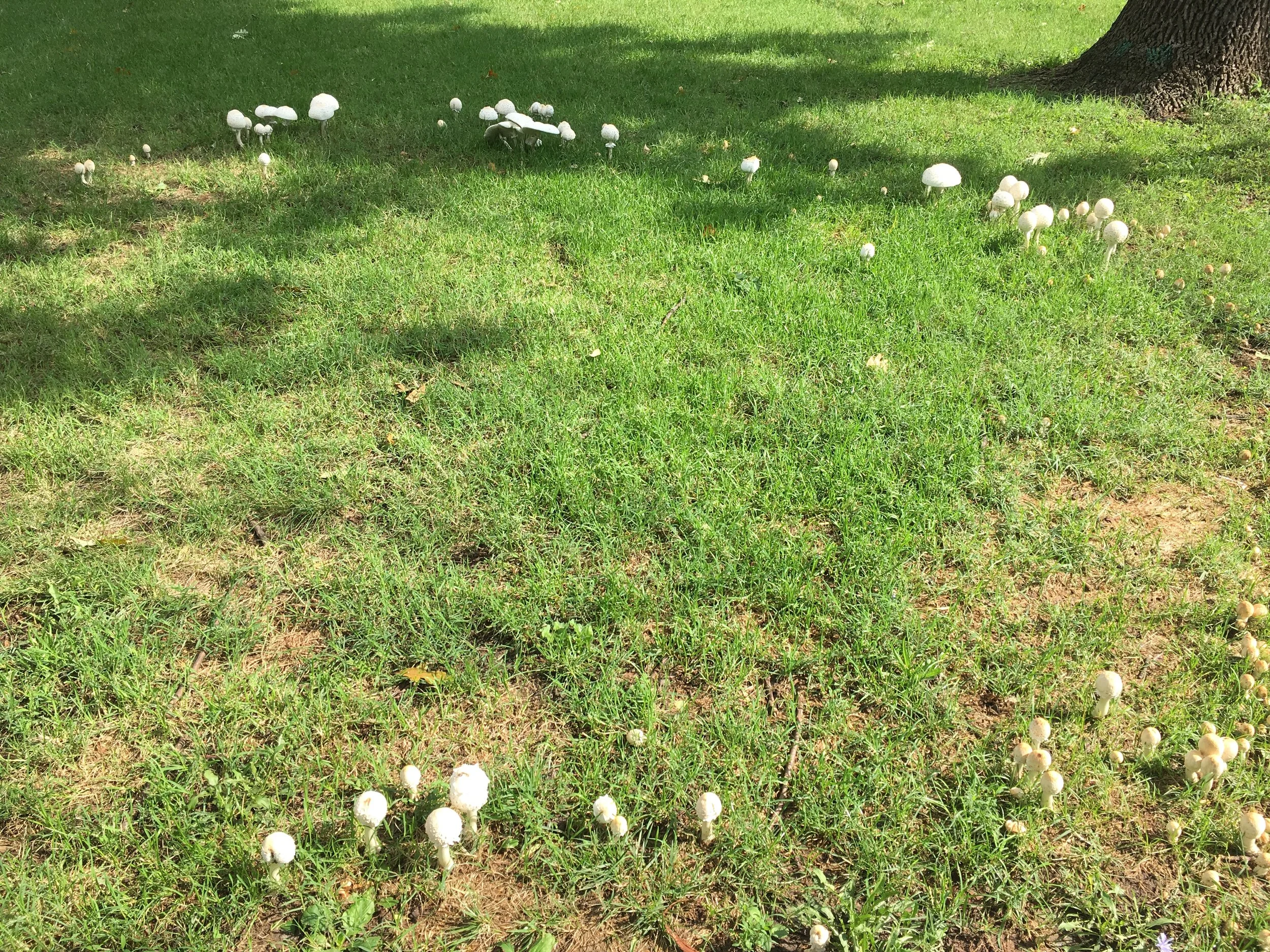
The first time I walked after the rain, I noticed these mushrooms. Cute, white, with speckles. They grow in circles--fairy rings, I thought. 

mushrooms.jpg
mushrooms1.jpg

After the second rainstorm, I noticed several trees scattered throughout the park, their limbs torn from the trunks. I though it was odd, as there hadn't been any major winds, but you know--city trees, am I right? 

unnamed (2).jpg
unnamed.jpg

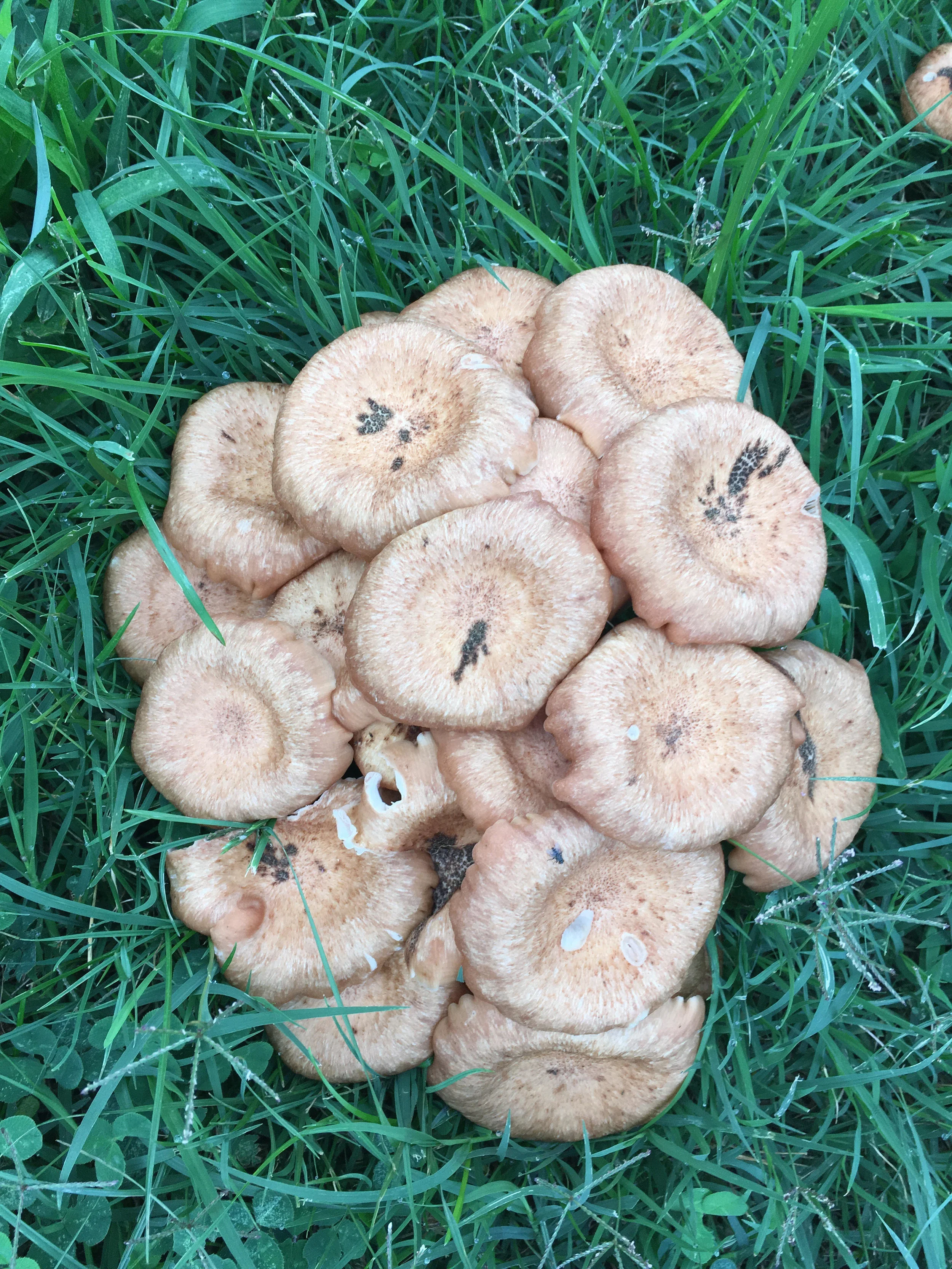
After the third storm, I noticed another patch of mushrooms, these ones much weirder than the first. I stared at them for a few minutes--and that's when I suddenly saw it. These weren't mushrooms. They were EGGS. 

unnamed (3).jpg
unnamed (1).jpg

And not just any eggs--dublagat eggs! Don't worry, I kicked, stomped, and smashed those eggs until nothing was left except fragments of chitin scattered through the grass. 

Once I realized they were eggs, that's when I saw the pattern as obviously as if someone had circled it in red marker and painted it on my face. 20/20 hindsight, you know? They lay their eggs in the middle of fields, because the eggs draw nutrients from the soil and plants around them and so can grow extremely large--they need a lot of space. They also grow in a variety of shapes and sizes, so the first mushrooms I saw were probably eggs as well. 

The other thing about dublagats is that they love sun and hate trees. They will make a point to go around and try to assassinate trees--hence all the arboreal damage. As for why they did everything in the rain? My guess is because they're in the city, and when it's raining there are fewer people around. Easier to not get spotted. But who knows--they're monsters.

dublagat.JPG

I'm actually not surprised that I didn't notice a dublagat in the park. They are masters of disguise. They have long stringy fur that can adjust to any texture color, making it easy to blend into whatever is around them--and the more texture and the more color, the better. They also make their eggs blend in (ie mushrooms). They're probably hiding in the community garden, come to think of it. Lots of food there (rabbits, birds, tomatoes), as well as plenty of places to hide among the vines and raised beds. 

A dublagat can grow as many heads as necessary. It's fur is really rough, and can be turned into thread. They're pretty easy to decapitate, and barring that, you can always run away (they're pretty slow). 

The thing you've gotta watch out for is their spit. Imagine a llama or a camel--except with acid. Yup. Lots of it. Your best bet is to sneak up behind them and slice off their heads as quickly as possible (in one stroke, preferably), or if you can't manage that, use a distance projectile weapon, like a slingshot or a bow and arrow.

Now, I can't emphasize this enough: BE CAREFUL. The world is riddled with monsters, and you just never know where they might be hiding. Stay alert and don't let your guard down. 

I'll let you know what else I discover in the coming days. 

Watch out for monsters and may the garg's blood rain!

Want more monsters? Click here: www.patreon.com/arielesieling
 

Rutherford the Unicorn Sheep Sees A Ghost [Preorder & Sneak Peek!]

I've been getting requests for the last two years for a new Rutherford book, and the time is here! Meet: Rutherford the Unicorn Sheep Sees A Ghost

I've been thinking about all the different possibilities for Rutherford books, and out of all of them, I decided I wanted to do a Halloween book. This is that book. 

In it, Rutherford the Unicorn Sheep gets a new apartment, and Wilfred comes over to see. But while Rutherford is giving the tour, strange things begin to happen. Could it be that Rutherford has moved in with a ghost? Join Rutherford and Wilfred in this exciting new adventure! 

Here's the cover!

The front...

The front...

And the back!

And the back!

[Note: soon you'll be able to buy the "Winter Collection" with Sees a Ghost, Christmas Surprise, Walnut Skunk Family Thanksgiving & Makes Pancakes, and the "Summer Collection" with Goes to the Beach, Walks the Dog, Goes for a Hike, and Visits the Apiary, at a discount!].

This entire book was photographed and drafted in one evening while Josh was at class. It was a rainy, dreary Tuesday, 95 degrees in the middle of a Baltimore summer, and we had a grand old time. The cats stayed out of the way, the dog made a brief appearance (his first Rutherford showing!) and the fish, well, he politely stayed in his bowl.

Below I've added a couple of images, to give you a taste of the story. In the meantime, stay tuned for the release date! If you're desperate for your copy, you can preorder a copy below! Yup that's a thing I do now :) It's on sale for $10.00 until the release. 

Now, for all Rutherford lovers everywhere, a sneak peak! I have selected 5 photos to taunt and tantalize you with. What could be happening? What is going on in this image? WHAT IS HAPPENING? Well, you'll just have to wait and see.

Books?

Books?

A bathroom sink??

A bathroom sink??

A counter and light switches???

A counter and light switches???

A LAMP???

A LAMP???

A DARKENED ROOM??? 

A DARKENED ROOM??? 

I know! Scary. 

Anyway, stay tuned: Rutherford the Unicorn Sheep Sees A Ghost is on its way!

And for those of you who want the next Rutherford book already? Well, I am planning at least two more in the series, but after that... it's anyone's guess :)

Sign up for more blog posts on unicorn sheep, the universe, and everything!

July Monster Report: Melc

<3 

<3 

Every so often, I ask Josh to stop at the grocery store after work to pick up one or two things. Well, yesterday, he did just that--some salsa, some lettuce, some roses (those were a surprise). When he got home, we sat down, ate dinner, watched some Supernatural, went to bed, all unaware that an interloper had managed to sneak into our home. 

The next morning, (that was today), Josh got up, showered, and went to work while I de-flea-ed the cats, walked the dog, you know, the usual. When I got home, I headed straight for the vase where I had put the roses the night before. I hadn't felt like trimming them immediately, so there they were, still in their packaging, just in a vase of water so they wouldn't die.

I trimmed them, put them in water, and took them up to my office. I sat down to work. 

Most of the monsters I've shared so far are enormous, but the truth is, they come in all shapes and sizes. There may be some so tiny that no one has discovered them yet. I have a theory that monsters cause a lot of things--disappearing tupperware lids, missing socks from the dryer, etc. At very least, it's important to be aware that monsters could be anywhere, and it's important to remember to pay attention, even in your own home where you think you're safe. 

This was one of those times when attention to detail is critical. I had music on while I was working, but I kept hearing a soft hissing noise. I thought maybe it was the sleeping dog, or one of that cats being weird, but investigating them turned up nothing. Then I thought maybe it was the HVAC being weird, but then I realized I hadn't even turned it on.

Then I noticed a thing, a tendril, sticking up and out of my bouquet of roses. Now, I might be wrong here, but roses don't usually move on their own, not quickly at any rate. I immediately grabbed them and took them outside where I dumped them out.

Inside was a melc! They're rather horrible creatures, honestly. They grow and move like worms with a mouth on each end, but are typically carrion eaters, always looking for the next dead thing to consume. That wouldn't be so bad, except that if they can't find dead things to eat, they just kill the closest living thing (that would be me, or the dog, or the cat). They are very slithery, and can grow limbs at will. They blend in pretty easily, usually looking just like a dead stick or leaf. They also always look happy, which while I realize is just humans anthropomorphizing them, it's still super creepy. 

Melc. Super creepy. Look how happy it is! Ugh.

Melc. Super creepy. Look how happy it is! Ugh.

Unfortunately, I was unable to kill it. It slithered out of the bouquet of roses and through the cracks in my deck. I'm hoping a bird ate it, but I won't cross my fingers. I left the flowers out on the deck, just in case. 

The moral of the story is this: Always stay alert! You never know where a monster might be hiding.

Watch out for monsters.

Click to learn how you can get more monsters: www.patreon.com/arielesieling.

Ariele University Assignment 1: Steering the Craft

One of the books on my fake "Master's Degree" list is Steering the Craft by Ursula K Le Guin. I loved this book, every chapter, though it took me nearly a year to go through all of the chapters and assignments. I consider Ursula K Le Guin to be a master of the craft, and although this book addressed a lot of basic concepts (voice, style, punctuation and grammar, tense, adjectives, adverbs, narration, point of view, etc.) it was a phenomenal read, and the exercises were absolutely worth it. My plan is to read this book again in 5 years and do the exercises again--maybe every 5 years for the rest of my life.

I'm going to post a couple of assignments I did below (I won't bore you with all of them), but first I want to share a few quotes from the book that really stood out to me. 

2-LeGuin.jpg

The first quote hit home quite hard, especially as I frequently complain to Josh that half the time he's the only person I see during a week. I also feel this strongly when I am revising my work, and am forced to make a decision about someone else's thoughts--do I change it the way they want me to, or keep it how I think it should be? 

"Ultimately, you write alone. And ultimately you and you alone can judge your work. The judgement that a work is complete--this is what I meant to do, and I stand by it--can come only from the writer, and it can be made rightly only by a writer who's learned to read her own work... until quite recently no writer had that training... they learned by doing it."

So that's what I'm doing here: practicing. Writing. Doing it.

The next quote is from her chapter on punctuation and grammar. Both are incredibly important, not only for making you look like you actually know what you're doing, but because they are essential for your reader's comprehension. Punctuation is a common language that we use to communicate intention and meaning in complex ideas, and even though we writers use copy editors to fix our mistakes, it's on us to make sure our ultimate meaning is clear. 

"That's the important thing for a writer: to know what you're doing with your language and why. This involves knowing usage and punctuation well enough to use them skillfully, not as rules that impede you but as tools that serve you."

And, if I might add, tools that help you communicate your ultimate meaning to your reader. It's all well and good to be able to string words together, but unless your reader knows how they're meant to be read, your meaning will remain unclear. 

The next quote is from her chapter on Person and Tense. For those of you that don't know me well, here's a fun fact: I have opinions. Very strong opinions, frequently, though I'm not apt to share them unless I trust someone, and rarely on social media. One of my strong opinions is that I really dislike present tense. It stresses me out when I read it or write it, however, I also know it's a very popular style currently, and a lot of excellent writers (read: Hunger Games) use it as a tactic. I've thought about trying to write in present tense to attract more readers, but Ursula K. Le Guin put me at ease. She said: 

"At the moment the present tense is in fashion; but if you're not comfortable with it, don't let yourself be crowded into using it."

The thing is, this is true with pretty much everything about writing. Avoiding adverbs is in style right now, too, but that doesn't mean all adverbs are bad or that you should never use them (Though Stephen King disagrees). Vigilante and dystopian stories are popular right now, but that doesn't mean you have to write them. Vampires are in fashion at the moment as well--you don't have to write about vampires. It's important to write your story, the story you want to tell, not the stories other people think you should tell. 

Towards the end of the book, Le Guin goes into detail about how to choose what to put in a book and what to leave out. The last exercise of the book was to write a 400 word scene, and then cut out 50% of it (it was traumatizing). My biggest takeaway was from that chapter was a single quote, that is both meaningful and hilarious: 

"Some say God is in the details; some say the Devil is in the details. Both are correct."

And the last quote I want to share sort of sums up how I feel about writing in general: 

"I like my image of 'steering the craft,' but in fact the story boat is a magic one. It knows its course. The job of the person at the helm is to help it find its own way to wherever it's going."

And that's what I am to do--become a better boat driver. Or pilot. Or captain--whatever they're called. A better writer. A better storyteller.

Below you will find some of the exercises I did as I was working through the book. I'll be honest, I don't really like to share rough draft work, as I know it could be way better than it is, but I'm working hard to be forgiving of myself for this project. That said, i did choose what I think are the my three best responses to the exercises, despite their lack of editing. 

StockPhoto-Pixabay-Typewriter.jpg

As always, click here to get blog posts (about writing, the universe, and everything) delivered to your inbox weekly!

Exercise 1: The Sound of Your Writing

This is the first exercise in the book. (I summarized the instructions--the exercises in the book have much lengthier descriptions.) 

Part 1: Write for pleasure. Have fun, cut loose, play around, repeat, invent, feel free.

Part 2: Describe an action or a strong emotion with rhythm; make the movement of the sentences represent the physical reality of the scene.

Both parts are included below: 

Soaked. Completely soaked—my jeans, my shirt, my underwear. Even my brain felt wet. I stumbled forward with sand sticking—stuck—all over me, to my feet, my hands, my hair. And salt, almost sticky, a thin coating on every inch of my skin.

Behind me, the waves crashed against each other and against the shore. The wind blew mightily; the palm trees creaked and bent in the face of its powerful gusts. Rain pelted my face so hard that it stung, and the thick water in the air made it difficult to see any distance in front of me.

I slowly made my way up the sandy beach, grateful for the shore, the ground beneath my feet. But I had no idea when the storm would end, or at least calm to a steady rain. I kept walking, up the beach, over the rocks, into the trees that groaned under the strength of the wind. Bushes filled the ground beneath them, and their leaves too, swayed and waved in the turbulent air. I pushed further and further inland, my legs sore and my eyes burning, but all I could see were more rocks, trees, and bushes, swaying, bending, rocking, back and forth, back and forth, to the rhythm of the storm, the rain, the wind.

I finally sank to my knees, head bowed, water rushing through my hair. There was nothing, no shelter, no food, no hope, and I was alone.

“Help, I whispered quietly.

---

And then, the clouds broke and one single ray of sunshine peeked through. I looked up through the forest of palm trees; it was so beautiful, the light shining on the greenest greens I’d ever seen, and the bluest blues of the sky. There were flowers—periwinkle, magenta, crimson, and golden—and a brilliant rainbow contrasted against the roiling gray clouds behind it. And I cried.

Then the sun was gone, and the rainbow, and the colors, but I had seen an end, the end of the storm. I smiled and dragged myself to my feet. I would keep on for as long as the new-found hope lasted. I would keep on.

Exercise 2: Sentence Length and Complex Syntax

One of the assignments for this chapter was to write a half a page that is all one sentence. I found it challenging--I like pauses and periods and space between ideas. This is based on a real-life experience.

There we were, in the car (I was driving, of course) on the way to the doctor’s office, and my grandmother insisted that the doctor needed to increase her brain medication, because after all, it wasn’t working so well now was it and she simply must have more of it to make her brain better again; this, of course, is not how Alzheimer’s medication works and I found myself in the unenviable position of having to explain to my own grandmother, who I had lived with and eaten with and gone to see shows with and gotten a dog with, that she was never, in fact, going to get better and that her medication only slowed the decline, it didn’t fix it altogether—and I had to explain this to her while simultaneously knowing that, due to the very disease she was taking the medication for, she would not, could not, possibly understand what I was telling her no matter how clearly I explained it or how loudly I spoke—and when we arrived she promptly asked the doctor to give her more brain medication, to which he responded quite simply: no.

Exercise 3: Verbs: Person and Tense

Tense and person, two things that every writer struggles with at some point. I loved this assignment, and I would do it again in a heartbeat. 

Part 1: Write a short story about an old woman, in which the narration moves back and forth between “then” and “now,” all in present or past tense (not both).

It seemed as if the green beans never ended. She carefully snipped and snapped bean after bean, her white hair shining in the afternoon sun.

It also seemed only a short time ago that she sat on this exact same porch, snapping a different heap of green beans, but with Walter beside her humming nearly incoherent songs from their youth, and muttering about how the Williams’ boys were likely to send a baseball through a car window if they weren’t careful.

Cumulus clouds hovered on the horizon, floating gently against a baby blue sky. It was quieter now than it used to be, and she knew fewer people in the neighborhood than she used to, but it was still nice. She still liked it.

Back when the Chansey twins had lived next door, things had been a lot livelier. Their dad had died, and Walter had always done things around their house for their mom to help out—fixing the plumbing, mowing the lawn, putting up a fence. And the girls had almost made her house their second home. They would run through the front door, shoes covered with mud, hair in braids, and beg for cookies or pie or whatever other tasty treats she had made that day. She missed them. But now Emma was studying to be a neurosurgeon and Ellie had gone and married a neurosurgeon—she had become a lawyer first—and soon they would have children of their own and forget all about her.

She leaned back, the pile of green beans in her bowl, and rocked slowly in her chair. So much time had passed, but it almost seemed like no time at all.

---

Part 2: Write the same story from a different person, but tell it where “then” and “now” are in different tenses.

My fingers ache from the arthritis and the rain that will be coming sometime this afternoon. Green beans cover my lap, and while I know they don’t have to be done—I’m the only one that eats them now—it soothes me.

Tendrils of loneliness slide through my thoughts, but I try to ignore them. Walter would have said, “Listen to that snap, my sweet Henrietta, don’t listen to those aches and pains.” And that’s all loneliness is after all, just the aches and pains of a long life.

I miss Walter. He asked me to marry him after only one date, and I said no. But he looked so handsome in his nice suit and tie, with his hair just cut and his tie a little crooked, that I told him he could ask me again in three months. I said yes the second time. We were happy for fifty-six years, three months, and two days.

The wind, when it blows, tosses my white hair all over, a mess, a jumble. But I just tuck it behind my ear and keep at the green beans, snip, snap, snip, snap. Mrs. Hadfield waves at me from across the street, one child on her hip and three more in tow. They moved to our neighborhood only about eight years ago, just after their oldest was born. I sent Walter by with a loaf of bread and some cookies a few weeks later, after they had settled, and he was gone for four hours, helping Mr. Hadfield assemble a playset in the backyard. Someone had given it to them as a gift, and Mr. Hadfield didn’t have much experience with that sort of thing. They finished the cookies off before Walter even came home.

A small smile crosses my lips as I remember this. Walter always made me smile so, and he still does, even though he’s gone. A picture of him sits on the mantel. In it, he wears pants covered with paint and has mud smeared all over his face. He was never happier then when he was working.

For his 35th birthday, I saved up all my extra change, every penny I could spare, and I ordered him a brand new flannel shirt from the Sears Catalogue. He put it on immediately and went to mow the grass. When I looked out, he was on the ground, just in his white t-shirt, changing the oil in the car. When I asked where his new shirt was, he pointed proudly to a hook where he had hung it so it wouldn’t get dirty. I lifted it and gasped at the filth that covered it. He gasped too.

Turned out, he had hung up an old rag made from flannel, and was using his new shirt as a rag instead. We both laughed until we cried, and he wore that old shirt for years, despite the oil stain right across the front.

Mrs. Hadfield hands the baby to her husband through the door, and sends the other kids in before coming out to unload the groceries. It will be dinnertime at their house soon, and then bedtime.

The rocking chair creaks and the wind gently blows. My fingers just keep snap, snap, snapping the beans. Snip, snap, snip, snap.

StockPhoto-Pixabay-rockingchair.jpg